

Cushion, Emerald, Oval & More: Your Guide to Dazzling Diamond Cuts
The Shape of Your Love Story
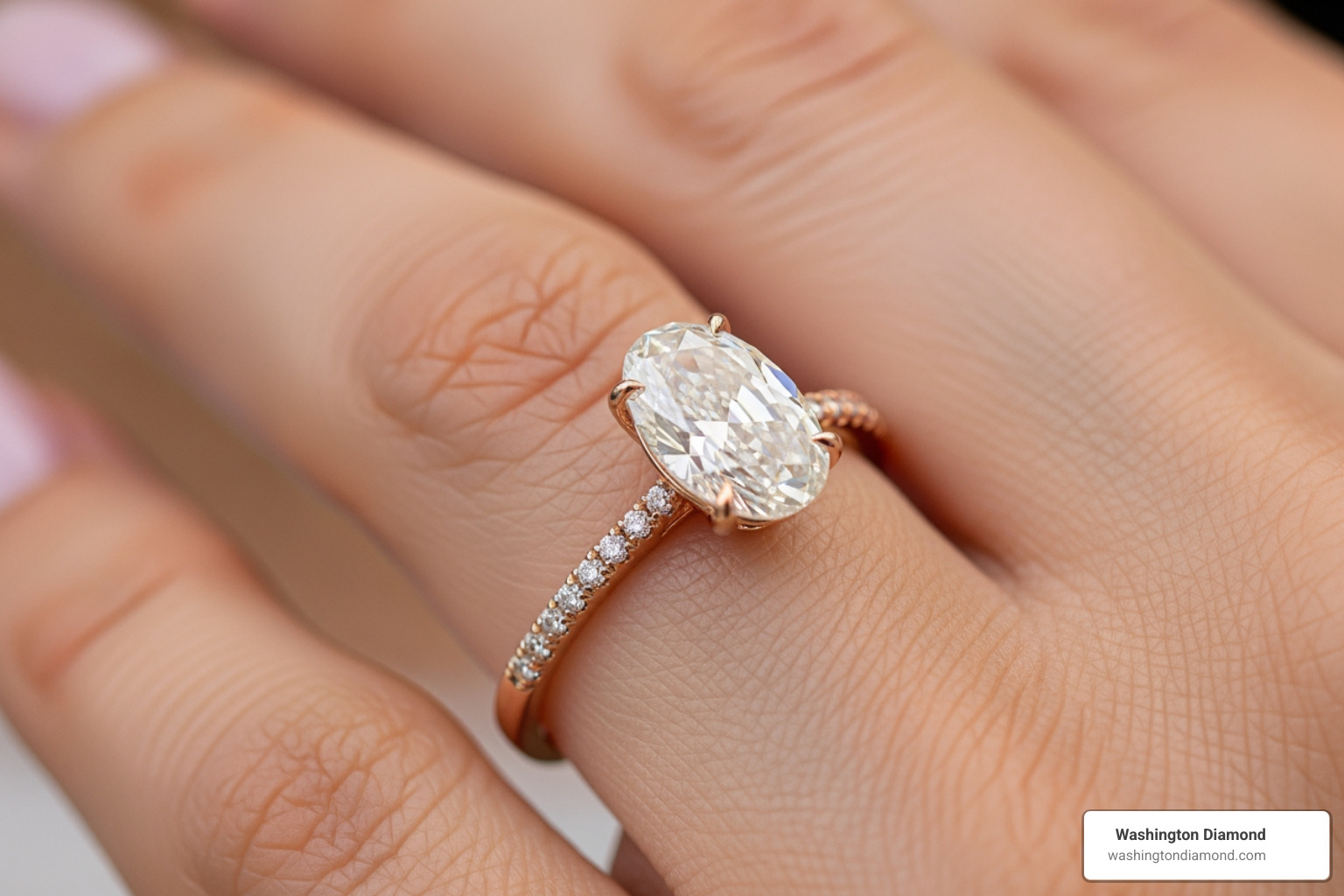
An oval diamond engagement ring combines timeless elegance with modern appeal, offering more perceived size than a round diamond of the same carat weight while flattering your finger with its elongated shape. Here's what makes oval diamonds special:
Quick Guide to Oval Diamond Engagement Rings:
- Popularity: 23% of all engagement rings purchased in 2023
- Ideal Length-to-Width Ratio: 1.30:1 to 1.50:1 for the most pleasing proportions
- Best Clarity Grades: VS1, VS2, or SI1 for value and beauty
- Recommended Color Grades: G-H (near colorless) for optimal balance
- Price Advantage: Generally less expensive than round diamonds per carat
- Key Consideration: Bow-tie effect varies by cut quality—always view your stone before purchasing
Choosing a diamond shape is one of the most personal decisions you'll make when selecting an engagement ring. While round brilliants have long dominated the market, fancy shapes—especially the oval cut—have surged in popularity. The oval diamond offers a unique blend of classic brilliance and distinctive character, making it perfect for those who want something both recognizable and special.
The oval's elongated silhouette creates a finger-flattering effect, making hands appear more slender and graceful. Unlike shapes with sharp corners that are prone to chipping, the oval's smooth edges make it a durable choice for everyday wear. And perhaps most appealing: an oval diamond engagement ring delivers more visual impact per carat than a round stone, giving you more presence for your investment.
Understanding what makes a great oval diamond requires knowledge beyond the traditional 4Cs. The length-to-width ratio determines whether your oval appears gently rounded or neatly elongated. Symmetry affects how light travels through the stone. And the bow-tie effect—that shadowy area across the center—varies dramatically from one diamond to the next.
I'm Tom Daube, and for decades I've helped couples in Northern Virginia find their perfect oval diamond engagement rings, guiding them through the nuances of cut quality, proportion, and value that make all the difference. Whether you're drawn to the oval's romantic silhouette or its practical advantages, my goal is to help you understand exactly what to look for.
Oval diamond engagement ring further reading:
Why Choose an Oval Diamond? Popularity, Price, and Panache
If you're looking for an engagement ring that truly stands out, an oval diamond engagement ring might just be your perfect match. Its rise in popularity isn't just a fleeting trend; it's a testament to its unique blend of classic elegance and practical advantages.
The numbers speak for themselves. According to The Knot’s 2023 Real Wedding Study, oval diamonds accounted for a significant 23% of all engagement rings purchased last year. This marks a substantial surge from 2016, when it was ranked as the sixth most popular shape among American consumers. It's clear that more and more couples are falling in love with this distinctive shape.
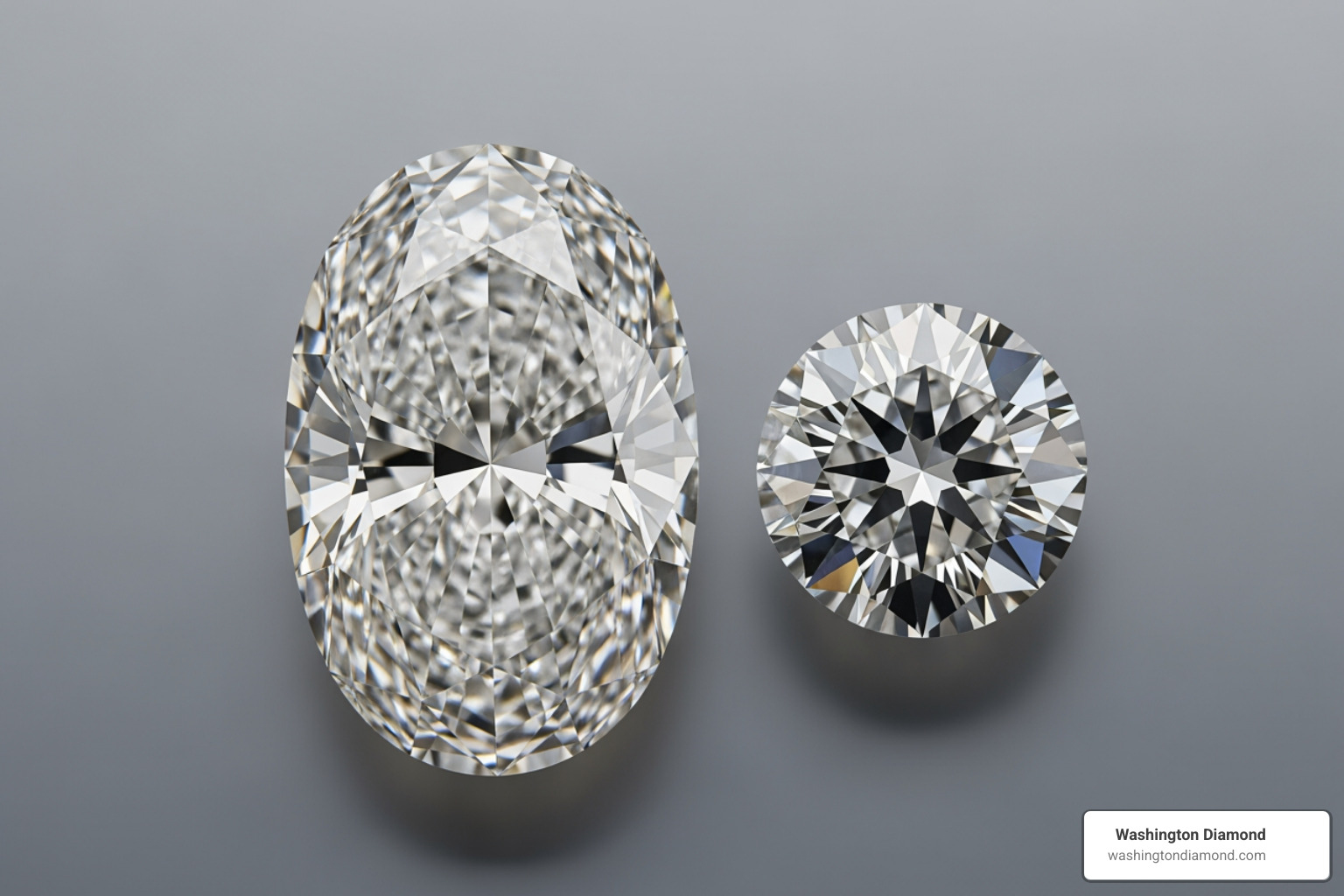
One of the most compelling reasons for this popularity surge is the oval diamond's incredible ability to give the impression of being larger than its actual carat weight. Because of its elongated surface area, a 1-carat oval diamond often looks considerably larger than a 1-carat round diamond. This means you can achieve a more substantial look without necessarily increasing your budget for carat weight—a win-win in our book!
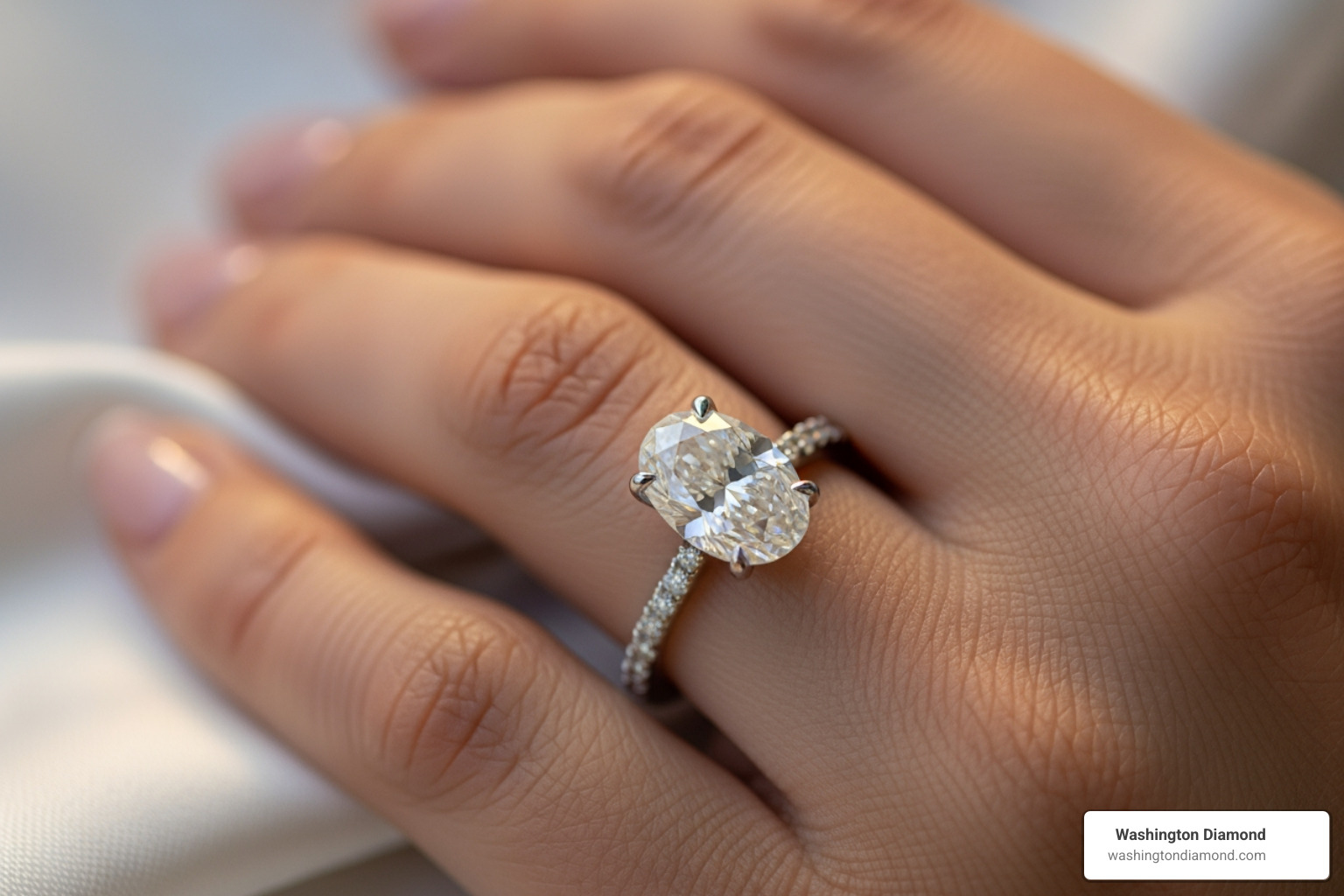
Beyond size, the oval shape is incredibly flattering. Its elongated silhouette creates an optical illusion, making the wearer's fingers appear longer and more slender. It's a subtle touch that adds an extra layer of grace and sophistication to any hand.
When it comes to sparkle, oval diamonds are brilliant cut diamonds, meaning they have a faceting pattern similar to a round brilliant. This gives them exceptional brilliance and fire, ensuring your ring will impress under any light. They truly combine the best of both worlds: the intense sparkle of a round diamond with the distinctive elegance of a fancy shape.
And let's not forget durability. Unlike diamond shapes with sharp corners, such as princess or marquise cuts, the smooth, rounded edges of an oval diamond make it less prone to chipping. This offers a bit more peace of mind for daily wear, letting you enjoy your beautiful ring without constant worry.
Finally, let's talk price. Generally, oval diamonds are less expensive per carat than their round brilliant counterparts. This makes them an excellent choice for couples looking to maximize their budget without compromising on beauty or presence. Whether you're considering a natural diamond or exploring the ethical elegance of a lab-grown diamond engagement ring, an oval can offer exceptional value.
The Expert's Guide to Buying an Oval Diamond Engagement Ring
Choosing an oval diamond engagement ring is an exciting journey, and we're here to ensure you make an informed decision. While the 4Cs (cut, color, clarity, and carat weight) are universally important, oval diamonds have unique characteristics that require a closer look. Always start with a certified diamond; a GIA grading report provides objective information about your stone's quality, ensuring you know exactly what you're getting. For more on this, check out our guide on Beyond the 4Cs: How to Choose Your Perfect Certified Loose Diamond.
Understanding the detailed information on a GIA Diamond Grading Report is crucial, especially for fancy shapes like the oval.
Understanding the Oval's Unique Characteristics
The beauty of an oval diamond lies in its proportions. Unlike round diamonds, which receive an overall cut grade, fancy shapes like ovals do not. Instead, we focus on specific aspects of their cut, such as the length-to-width ratio, shape appeal, symmetry, and girdle thickness.
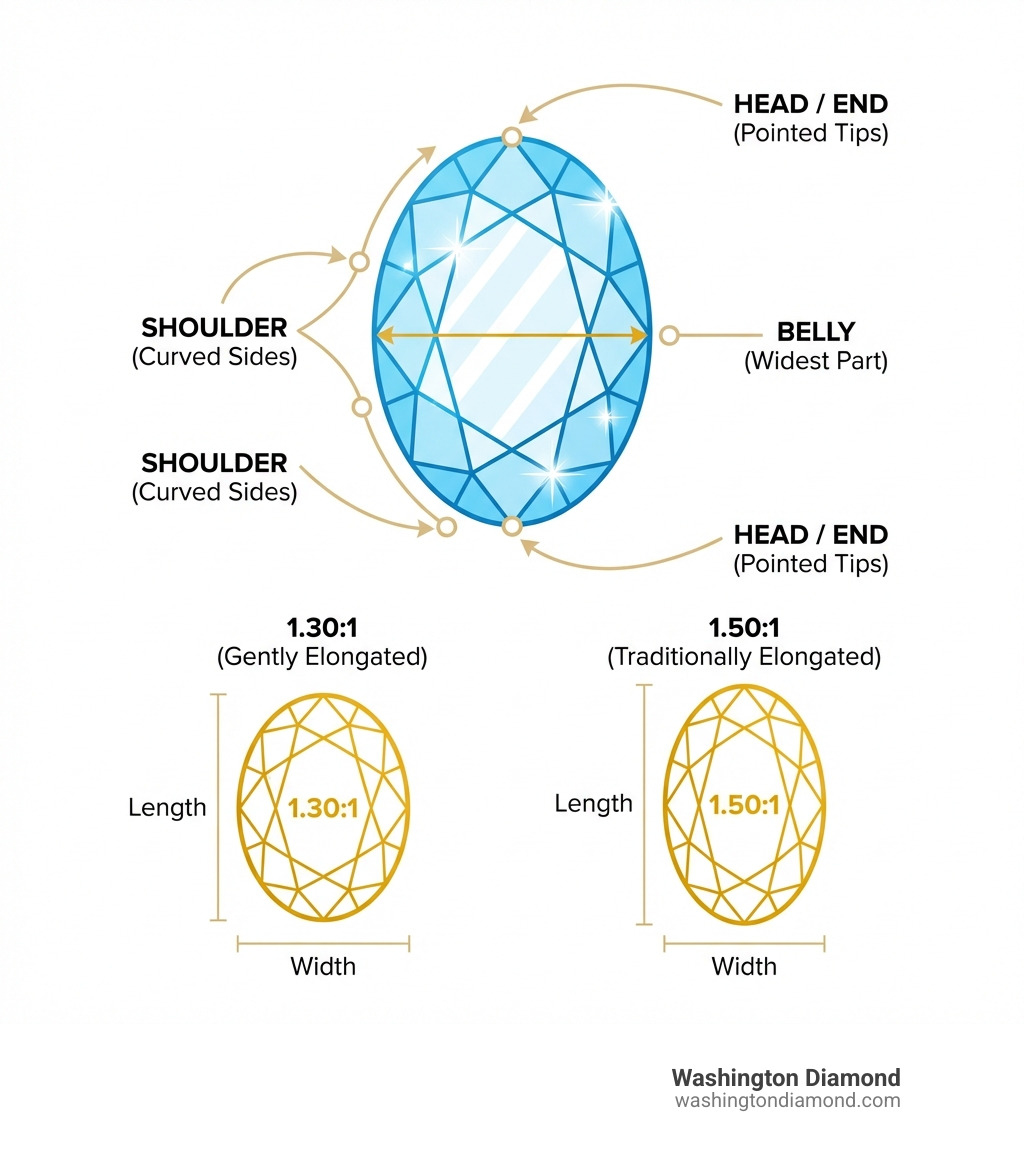
The length-to-width ratio is paramount as it dictates the overall silhouette of your oval diamond. This ratio describes how elongated the diamond appears. While personal preference plays a huge role, many find that a ratio between 1.30:1 and 1.50:1 offers the most pleasing balance.
- A ratio of 1.20:1 to 1.29:1 will result in a shorter, rounder oval.
- A ratio of 1.30:1 to 1.40:1 creates a gently elongated look.
- A ratio of 1.41:1 to 1.50:1 offers a longer, more traditional oval shape.
- Ratios above 1.50:1 can appear very long and narrow.
As experts in diamond selection, we find that these ratios strike a beautiful balance, making the diamond appear both graceful and substantial. It's about what looks best to your eye!
Shape appeal refers to the overall aesthetic grace of the diamond's outline. When examining an oval diamond, look for smooth, continuous curves without any flat spots or bulging shoulders. The transition from the rounded ends (head or end) to the widest part (belly) should be fluid and neat.
Symmetry in an oval diamond is crucial for optimal sparkle. While GIA doesn't provide an overall cut grade for ovals, they do grade polish and symmetry. We look for Excellent or Very Good symmetry. This means that if you were to draw an imaginary line down the center of the diamond and another across its middle, each half would be a mirror image of the other. The culet (the small facet at the bottom tip of the diamond) should also be perfectly centered.
Finally, girdle thickness is another factor to consider. The girdle is the narrow edge where the crown meets the pavilion. We typically recommend a medium girdle thickness. An overly thick girdle adds weight to the diamond without increasing its visible size, meaning you pay for carat weight you can't see. Conversely, an extremely thin girdle can make the diamond more vulnerable to chipping.
The Bow-Tie Effect: What It Is and How to Minimize It
One characteristic unique to oval diamonds (and other elongated shapes like marquise and pear) is the "bow-tie effect." This refers to a dark, bow-tie-shaped shadow that can appear across the center of the diamond.
The bow-tie is caused by light being blocked by the viewer's head and shoulders, preventing it from reflecting back to the eye. It's a natural phenomenon in these shapes, but its prominence varies greatly depending on the diamond's cut quality. A well-cut oval will have a minimal, subtle bow-tie, while a poorly cut one can have a very noticeable, dark shadow that detracts from the diamond's brilliance.
How do we assess this? The best way is to view the diamond in person from various angles and under different lighting conditions. Since we specialize in private, appointment-only consultations in Northern Virginia, we ensure you have ample time to examine your chosen diamond carefully. If you're considering purchasing online, always insist on high-definition images and videos that clearly show the diamond from all sides. A slight bow-tie can add character and dimension, but a dominant dark area should generally be avoided.
Best Clarity and Color for an Oval Diamond Engagement Ring
The brilliant faceting style of an oval diamond is quite forgiving when it comes to clarity. Its numerous facets effectively hide minor inclusions, meaning you often don't need to splurge on a flawless stone to get an eye-clean diamond.
For clarity, we often recommend VS1, VS2, or SI1 grades. These grades offer an excellent balance of value and appearance. Inclusions in VS (Very Slightly Included) and SI (Slightly Included) diamonds are typically difficult or impossible to see with the naked eye, making them "eye-clean." For many buyers, a clarity grade of VS or SI offers the best balance of value and appearance for an oval diamond engagement ring.
When it comes to color, the choice can significantly impact the diamond's appearance and price.
- D-F grades represent truly colorless diamonds, which are the rarest and most expensive.
- G-H grades are considered "near colorless" and offer an ideal balance of beauty and value for oval diamonds. To the untrained eye, these stones appear perfectly white.
- J color can also be a beautiful option, especially when set in yellow or rose gold, as the warm tones of the metal can complement and even mask a slight yellowish tint in the diamond.
The choice of metal for your setting can also influence how the diamond's color is perceived. White metals like platinum or white gold will highlight any warmth in a lower color grade, while yellow or rose gold can make a slightly warmer diamond appear whiter by contrast.
Carat Weight and Cost
As we've discussed, one of the great advantages of an oval diamond is its ability to look larger than its carat weight suggests. This means you can achieve a significant visual presence without necessarily paying the premium for a higher carat weight that might be required for a round diamond.
The cost of an oval diamond engagement ring is, of course, influenced by all the 4Cs: carat weight, color, clarity, and cut quality (as assessed by symmetry, polish, and the absence of a prominent bow-tie). For example, a 2-carat oval cut diamond alone can cost anywhere from $5,000 to $35,000 or more, depending on the stone's specific quality grades. The setting itself can add another $300 to $5,000.
If you're looking to maximize your budget, considering a lab-grown diamond engagement ring can offer substantial savings, allowing you to get a larger or higher-quality oval diamond for your investment.
Perfectly Set: Finding the Ideal Style for Your Oval Diamond
Once you've selected your perfect oval diamond, the next step is finding the ideal setting to showcase its unique beauty. The right setting not only improves the diamond's brilliance and protects it but also reflects your personal style. Think of the setting as the frame for your masterpiece – it should complement, not overpower, the star of the show. We offer a wide range of engagement ring settings designed to highlight every diamond shape.
Popular Setting Styles for an Oval Diamond Engagement Ring
Oval diamonds are incredibly versatile and look stunning in a variety of settings. Here are some of the most popular choices:
- Solitaire Setting: This classic choice allows the oval diamond to take center stage, emphasizing its neat shape and brilliance. Typically featuring four or six prongs, a solitaire setting is timeless and sophisticated, perfect for those who appreciate understated beauty.
- Halo Setting: For those who love extra sparkle and want to make their oval diamond appear even larger, a halo setting is an excellent option. A ring of smaller diamonds encircles the central oval, creating a dazzling frame that amplifies its perceived size and brilliance.
- Three-Stone Setting: Symbolizing past, present, and future, a three-stone setting with an oval diamond in the center flanked by two smaller diamonds (often round, pear, or even smaller ovals) creates a rich and meaningful look.
- Bezel Setting: Offering maximum protection and a sleek, modern aesthetic, a bezel setting completely encircles the oval diamond with a metal rim. This is an ideal choice for active individuals or those who prefer a contemporary design.
- East-West Setting: This unique orientation positions the oval diamond horizontally across the finger rather than vertically. An east-west setting offers a distinctive, modern twist on the traditional oval ring, making it a true conversation starter.
- Toi et Moi Rings: For a romantic and unique statement, a Toi et Moi ring features two primary stones set side-by-side. An oval diamond paired with another oval or a different fancy shape creates a beautiful symbol of two souls intertwined. Explore more about these unique designs in The Modern Twist: A Look at Bezel and Oval Toi et Moi Rings.
Complementing Your Ring with Band Widths and Coordinating Jewelry
The width of your ring's band can significantly alter the overall aesthetic of your oval diamond engagement ring.
- Thin bands (under 2mm) create a delicate, neat look, allowing the oval diamond to appear even larger and more prominent. They are also perfect for stacking with other rings.
- Wider bands offer a more modern and substantial statement, providing a bolder foundation for your oval.
When it comes to stacking bands, the elongated shape of an oval often pairs beautifully with curved or contoured wedding bands that nestle snugly against its form.
To complete your look, consider coordinating jewelry pieces that complement your oval diamond engagement ring. Oval-cut pendant necklaces, eternity bands featuring small oval diamonds, or even oval diamond earrings can create a cohesive and sophisticated ensemble. Of course, mixing and matching diamond cuts can also create a stylish, personalized look!
Oval in Context: History, Comparisons, and Famous Examples
The oval diamond might seem like a contemporary favorite, but its history stretches back further than you might think. While elongated shapes have appeared in various forms of diamond cutting for centuries, the modern oval brilliant cut as we know it was developed in 1957 by the Russian-born diamond cutter Lazare Kaplan. Kaplan was renowned for his skill in changing flawed diamonds into valuable gems, and his innovative cutting technique brought new life and brilliance to this neat shape.
The oval diamond saw a resurgence in popularity in the late 1990s and early 2000s, and its current dominance in the engagement ring market truly solidified over the last few years. Its blend of classic brilliance with a distinct silhouette makes it appealing to those who appreciate both tradition and individuality.
Famous oval diamonds have graced royalty and celebrities alike, cementing their iconic status:
- The Koh-i-Noor, a legendary 105.60-carat oval-shaped diamond, boasts a rich and storied history, having passed through the hands of various rulers before finding its place among the British Crown Jewels. It's now famously displayed in the Tower of London.
- The CTF Pink Star, a breathtaking 59.60-carat oval diamond, made headlines when it sold for a record-breaking $71.2 million at auction, becoming one of the most expensive diamonds ever sold.
- Celebrities like Hailey Baldwin Bieber, Kate Middleton (whose ring features an oval sapphire, but illustrates the shape's allure), Blake Lively, and Kourtney Kardashian have all sported stunning oval diamond engagement rings, further fueling their desirability.
Comparing Oval, Round, and Cushion Diamonds
To help you decide if an oval diamond is truly the one for you, let's briefly compare it to two other popular shapes: the timeless round brilliant and the romantic cushion cut.
| Comparison Criteria | Oval Diamond | Round Brilliant Diamond | Cushion Diamond |
|---|---|---|---|
| Sparkle | Excellent brilliance and fire, similar to a round brilliant, but with a unique light pattern due to elongation. | Best brilliance and fire, known for maximizing light return. Considered the sparkliest diamond shape. | High brilliance with a softer, romantic sparkle. Can be "cushion brilliant" (more sparkle) or "cushion modified brilliant" (crushed ice look). |
| Perceived Size | Appears larger than its actual carat weight due to its elongated surface area; flatters and elongates fingers. | Appears true to its carat weight; a classic, balanced look. | Often appears smaller than its carat weight compared to round or oval diamonds, due to its deeper cut. |
| Price per Carat | Generally less expensive than round diamonds, offering excellent value and visual impact for your budget. | Most expensive per carat due to high demand and waste during cutting. | Often more affordable per carat than round diamonds, but can vary widely based on cut style (brilliant vs. modified brilliant) and demand. |
| Durability | Excellent durability due to rounded edges, making it less prone to chipping compared to shapes with sharp corners. | Excellent durability; its symmetrical shape and lack of sharp points make it very resistant to chipping. | Good durability; rounded corners reduce vulnerability compared to sharp-cornered shapes like princess, but still less robust than round or oval. |
Frequently Asked Questions about Oval Diamonds
We often hear similar questions from clients in Northern Virginia who are considering an oval diamond engagement ring. Here are some of the most common ones:
Are oval diamonds more or less expensive than round diamonds?
Generally, oval diamonds are less expensive than round diamonds of the same carat weight and quality. This is largely due to the higher demand for round diamonds and the greater amount of rough diamond material that must be cut away to achieve a perfect round brilliant shape. This price-per-carat difference can be significant, allowing you to maximize your budget and potentially acquire a larger or higher-quality oval diamond than you might otherwise afford. For more insights into diamond pricing, explore our Loose Diamonds: Complete Guide.
Do oval diamonds sparkle as much as round diamonds?
While round brilliant diamonds are universally recognized as having the highest level of sparkle due to their precisely engineered facet pattern for light return, oval diamonds are also brilliant cut diamonds with many facets designed to maximize sparkle. They exhibit excellent brilliance and fire, creating a dazzling display of light. The sparkle pattern might differ slightly from a round diamond due to the elongated shape, but it is undeniably high. The choice of setting can also improve an oval diamond's sparkle; for example, a halo setting will add even more glitter to the overall ring.
Are oval diamonds a timeless or trendy choice?
Oval diamonds are beautifully both timeless and trendy. They have historical roots, with elongated brilliant cuts existing for centuries before Lazare Kaplan's modern interpretation in 1957. Their classic silhouette and enduring elegance ensure they will always be a sophisticated choice. However, their recent surge in popularity, accounting for 23% of engagement rings in 2023, also makes them a highly fashionable and sought-after option. This unique blend means an oval diamond engagement ring is a choice that is both current and will remain cherished for generations to come.
Your Perfect Oval Awaits
The allure of an oval diamond engagement ring is undeniable. With its neat elongation, impressive visual size, exceptional brilliance, and surprising durability, it's a choice that beautifully combines classic charm with modern appeal. We understand that finding the perfect diamond is a deeply personal experience, and we are dedicated to making that journey as memorable and enjoyable as possible for you.
At Washington Diamond, we pride ourselves on offering a private, appointment-only studio experience in Northern Virginia. This allows us to provide you with our undivided attention, ensuring a personalized and pressure-free environment as you explore our exquisite collection of diamonds and settings. Our experts are here to guide you through every nuance, from understanding the subtle beauty of length-to-width ratios to navigating the perfect clarity and color grades for your budget. We believe that choosing an engagement ring should be an intimate journey, and we are honored to be a part of yours.
Let our experts help you uncover the oval diamond engagement ring that perfectly captures your love story. We invite you to experience the Washington Diamond difference, where exceptional quality meets unparalleled service. To learn more about what makes us unique, read Your Guide to Unforgettable Diamond Rings in Washington D.C. and find why we are considered the 2024 Best Family-Owned Jeweler in DC.
From the blog
View all


