

Ultimate Guide to Halo Engagement Rings
The Timeless Appeal of Halo Engagement Rings
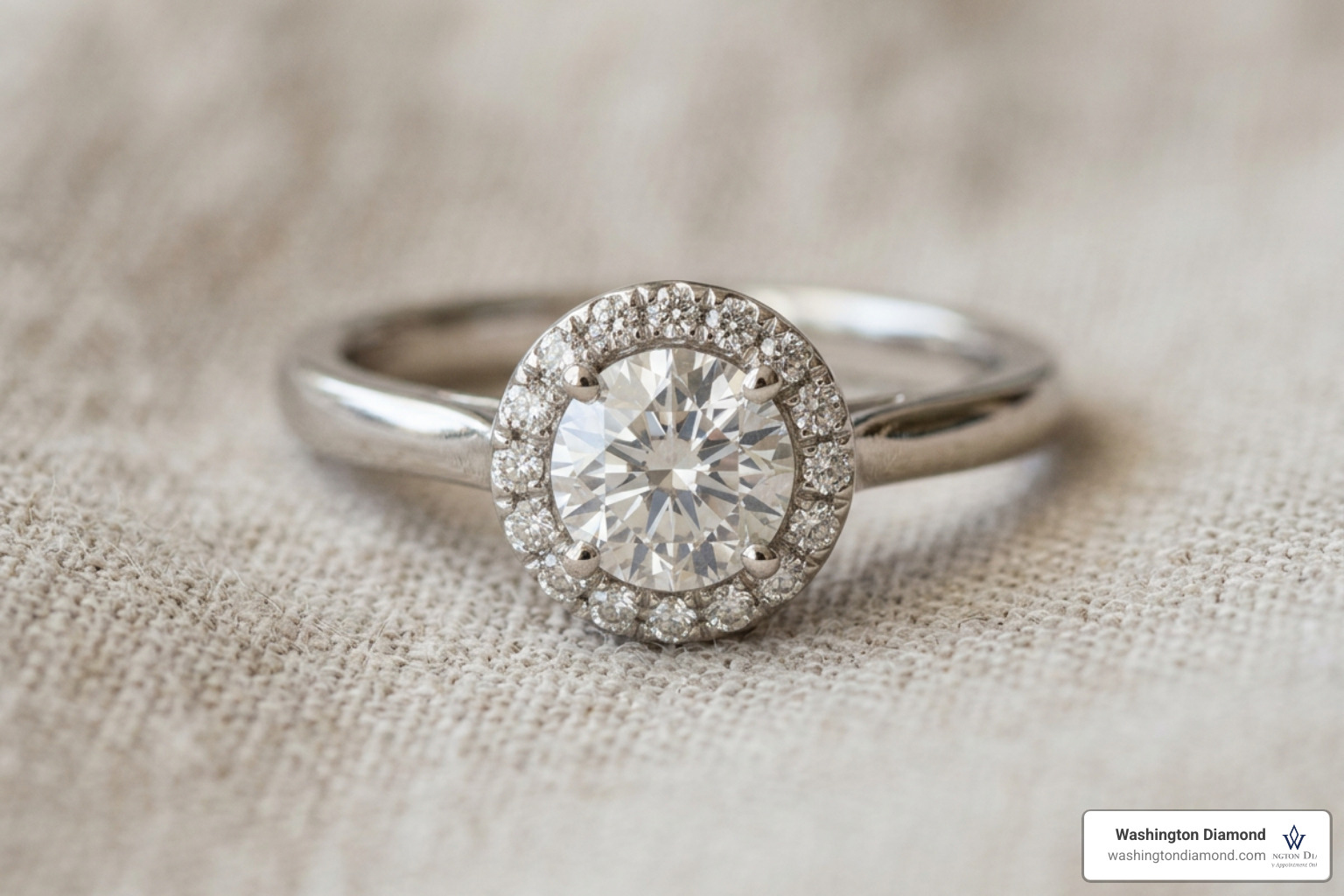
Halo engagement rings are one of the most popular and enduring styles in fine jewelry — and for good reason.
What is a halo engagement ring? A halo ring features a center stone surrounded by a circle (or "halo") of smaller diamonds. This design makes the center stone look larger and more brilliant than it actually is.
Quick facts:
- Style origin: Popularized in the 1920s–1930s Art Deco era
- How it works: Smaller accent diamonds encircle the center stone, adding sparkle and visual size
- Center stone options: Round, oval, cushion, princess, marquise, and more
- Metal options: White gold, yellow gold, rose gold, platinum
- Diamond types: Natural or lab-grown diamonds
- Price range: From around $800 to well over $5,000 depending on stone, metal, and craftsmanship
Whether you're drawn to the vintage glamour of a classic double halo or the clean lines of a modern hidden halo, there's a style to suit every taste and budget.
I'm Tom Daube, a GIA-certified diamond expert and jewelry designer with decades of experience helping clients find the perfect halo engagement ring — often at prices well under listed wholesale. I'll walk you through everything you need to know to make a confident, informed choice.
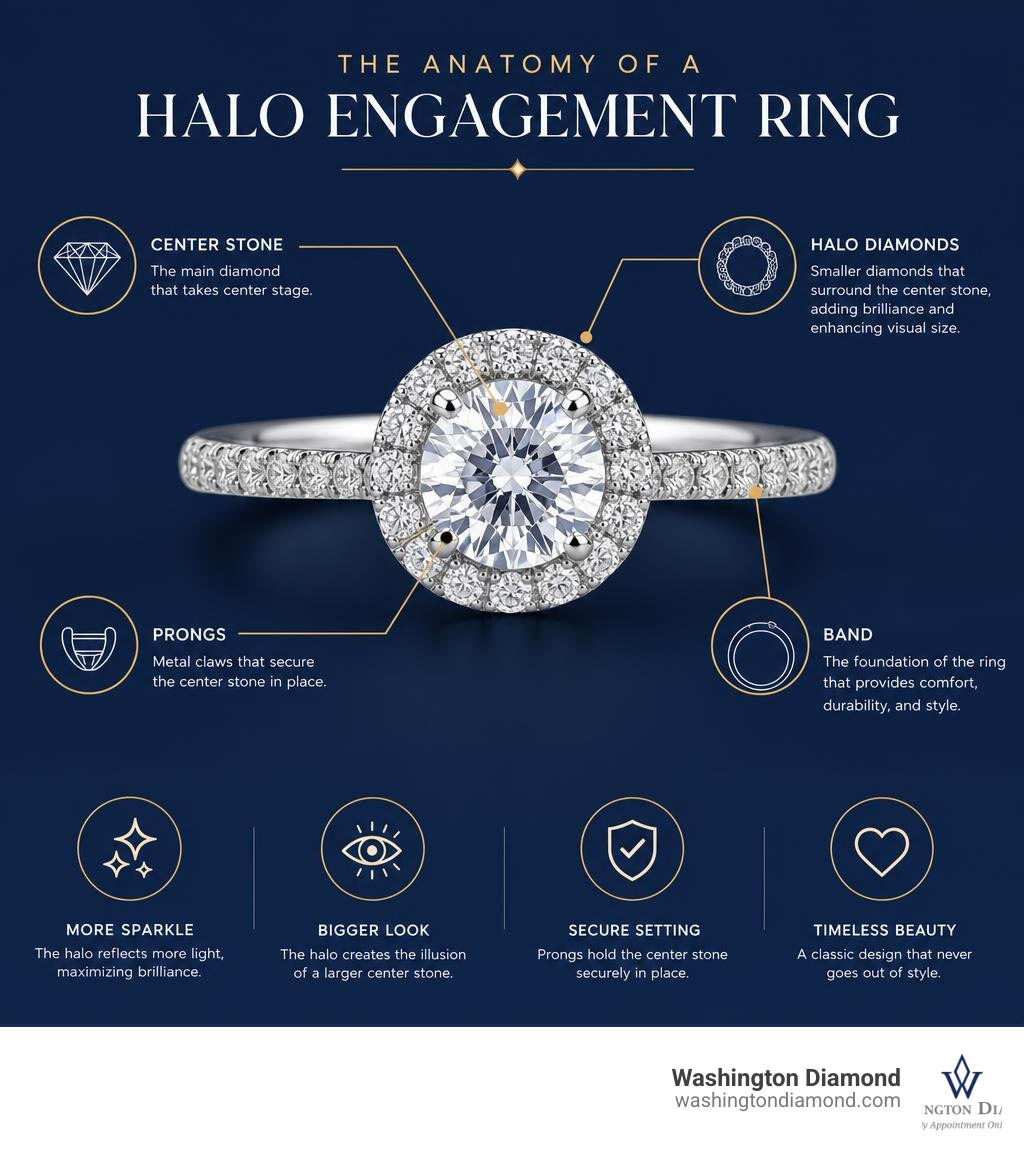
What Are Halo Engagement Rings and How Do They Work?
At its core, a halo setting is a masterclass in optical physics and artistic design. By surrounding a single center diamond with a border of smaller, sparkling accent stones, the setting creates a powerful optical illusion.
This border of smaller diamonds tricks the eye into seeing the entire perimeter as one single, massive diamond. From a distance, a 1-carat center stone nestled within a well-proportioned halo can easily look like a 1.5-carat or even a 2-carat diamond.
Beyond making the center stone look larger, the halo significantly boosts the ring’s overall light performance. The closely set accent diamonds don't just sparkle on their own; they actually reflect light back onto the center stone, amplifying its brilliance and hiding minor inclusions or color tints.
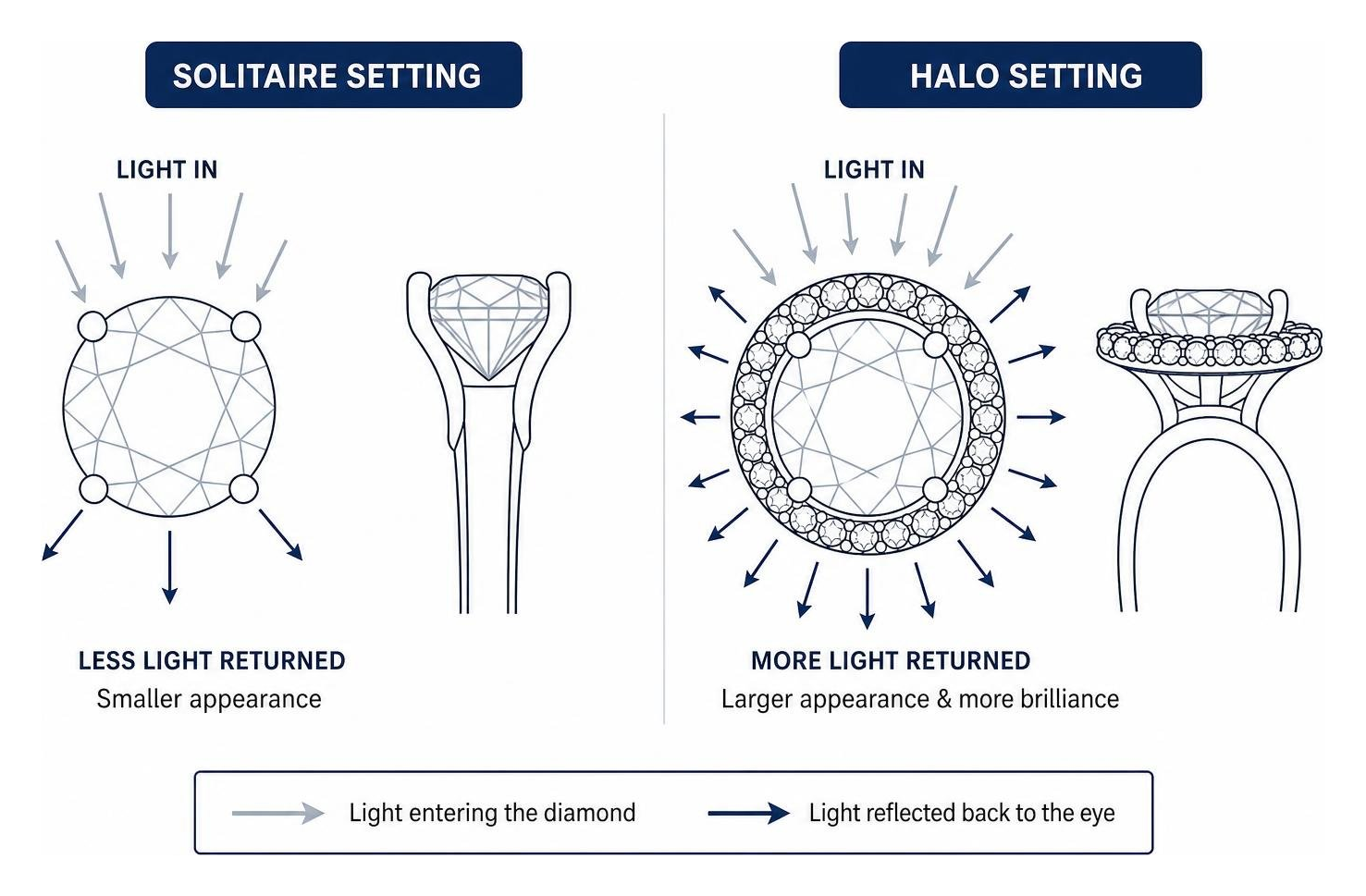
While many modern buyers view the halo as a contemporary trend, its roots are deeply historical. The style rose to prominence during the Art Deco movement of the 1920s and 1930s, when jewelers embraced geometric symmetry, clean lines, and bold, glittering patterns.
To learn more about how this setting compares to other classic designs, check out our comprehensive Engagement Ring Settings 101.
Popular Styles and Metal Options for Halo Settings
The choice of metal and setting style defines the personality of your ring. The most popular metal options include:
- Platinum: The ultimate in luxury and durability. Its natural white sheen never fades and holds stones incredibly securely.
- White Gold (14K vs. 18K): A highly popular choice. 14K white gold offers excellent durability for daily wear, while 18K gold contains a higher percentage of pure gold, offering a more luxurious feel.
- Yellow Gold: Provides a warm, classic contrast that makes white diamonds pop.
- Rose Gold: Perfect for a vintage, romantic aesthetic.
How those accent diamonds are mounted also matters. Many halo rings utilize a pavé or micro-pavé setting, where tiny diamonds are held in place by microscopic prongs, creating a continuous "paved" surface of diamond sparkle. You can dive deeper into these techniques in our Pave Engagement Setting Complete Guide and our guide on the delicate Micro Pave Setting.
The band itself can also be customized, whether you prefer a simple high-polish metal shank, a split-shank, or a glittering diamond-accented band. Explore your options in our Custom Engagement Ring Band Guide.
Traditional vs. Hidden Halo Engagement Rings
When shopping for a halo engagement ring, you will quickly encounter two primary design philosophies: the traditional halo and the hidden halo.
- Traditional Halo: The accent diamonds encircle the center stone on the same horizontal plane. This design maximizes the face-up surface area of the ring, creating the largest possible visual footprint from the top view.
- Hidden Halo: A modern, understated alternative. In a hidden halo ring, the accent diamonds are placed just beneath the center stone, wrapped around the base of the prongs (the collar or gallery). This means the halo is subtle from the top but offers a breathtaking, sparkling surprise when viewed from the side profile.
Choosing between the two depends on your personal style and lifestyle. If you want maximum drama and a larger visual presence from the top, a traditional halo is the clear winner. If you prefer a sleeker, contemporary profile with subtle, intricate details, a hidden halo is an elegant choice.
Customizing Your Halo Engagement Rings
While off-the-shelf rings are readily available, opting for a bespoke design allows you to control every variable, from the exact millimeter spacing of the accent diamonds to the height of the setting.
Customizing your ring ensures that the halo is perfectly proportioned to your specific center stone, avoiding the awkward gaps often seen in mass-produced settings. To learn how we bring these dream designs to life in our Northern Virginia studio, explore our Custom Engagement Rings Ultimate Guide.
How Stone Shapes Influence the Look of a Halo Ring
The shape of your center stone dictates the geometry and overall vibe of your halo engagement ring. Different shapes interact with the halo in unique ways:
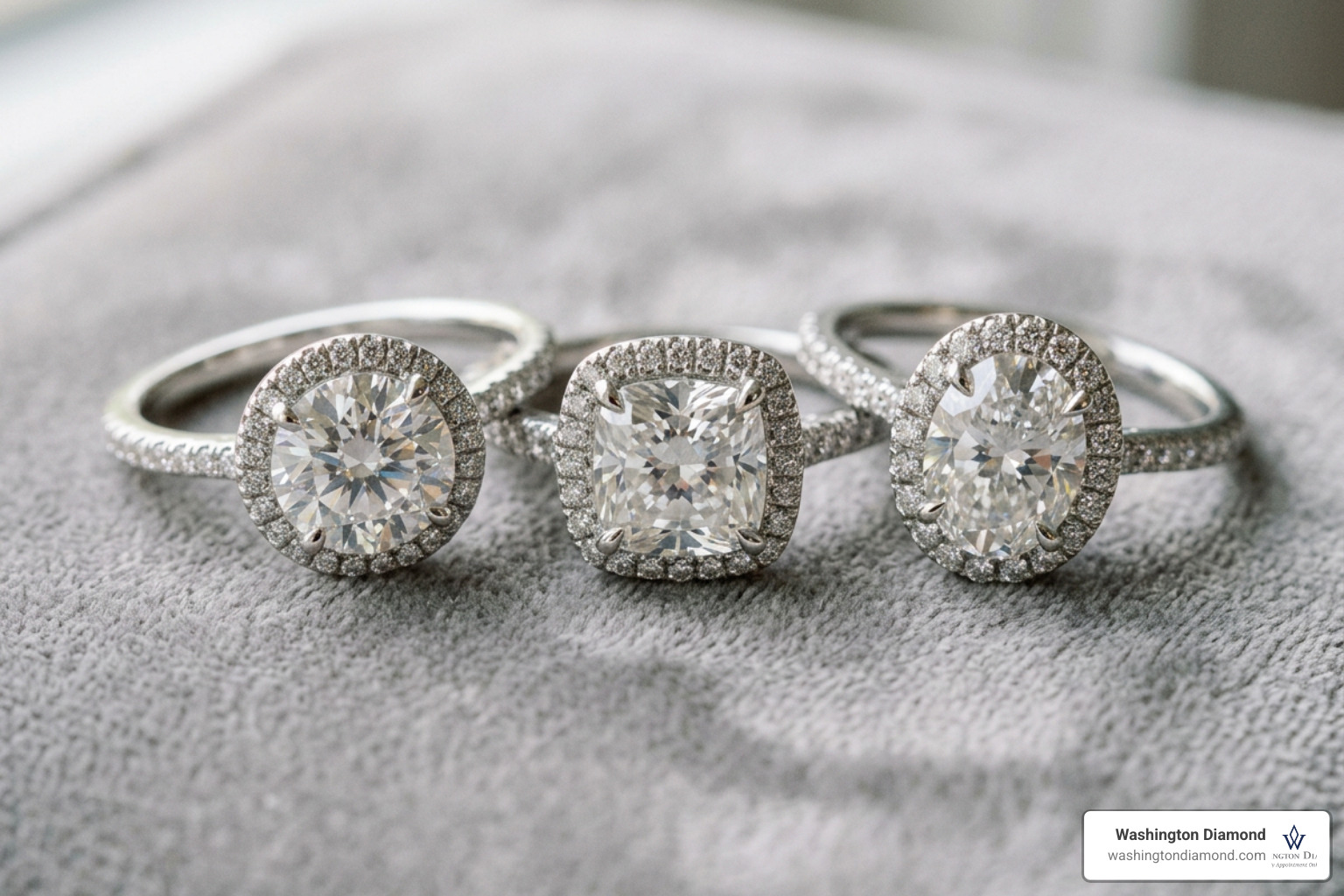
- Round Brilliant: The most classic combination. A round halo mirrors the symmetry of the round center stone, creating a seamless, ultra-brilliant look.
- Cushion Cut: With its pillow-like shape and soft, rounded corners, a cushion-cut center stone paired with a cushion halo offers a distinctly vintage, romantic appeal.
- Princess Cut: A square halo with sharp, clean corners highlights the modern, architectural lines of a princess-cut diamond.
- Marquise Shape: An elongated marquise diamond surrounded by a halo creates a striking, dramatic silhouette that visually lengthens the finger.
- Oval Cut: Oval halos have exploded in popularity in recent years, offering the soft elegance of a round diamond but with an elongated shape that maximizes face-up size.
When designing a halo, maintaining strict symmetry and proportion is essential. The accent stones must be carefully scaled to complement—rather than overwhelm—the center stone.
Lab-Grown vs. Natural Diamonds in Halo Settings
One of the most important decisions you will make is choosing between a natural diamond and a lab-grown diamond. Both options are physically, chemically, and optically identical, but they differ in terms of origin, price, and environmental footprint. For a helpful independent overview of diamond quality factors, you can also review GIA's diamond education resources.
| Feature | Lab-Grown Diamonds | Natural Diamonds |
|---|---|---|
| Chemical Composition | Pure carbon crystal (identical to natural) | Pure carbon crystal |
| Visual Performance | Identical brilliance, fire, and scintillation | Identical brilliance, fire, and scintillation |
| Origin | Created in controlled laboratory environments | Mined from deep within the Earth |
| Price Point | Significantly more affordable (up to 70-80% less) | Higher cost due to rarity and mining expenses |
| Ethical & Eco Profile | Mine-free; lower direct land impact | Requires strict sourcing standards (e.g., Canadamark) |
| Common Certifications | IGI, GCAL, GIA | GIA, Canadamark |
For buyers focused on maximizing their budget, lab-grown diamonds allow you to purchase a much larger center stone or a more intricate, diamond-heavy halo setting for the same price. However, natural diamonds remain the choice for those who value the rare, ancient origin of earth-mined gems.
Whichever path you choose, we ensure all our stones are certified by leading independent labs like the GIA (Gemological Institute of America) or GCAL (Gemprint Certification & Assurance Lab), guaranteeing their quality and authenticity.
Pricing, Quality, and Buying Considerations in 2026
As we navigate the jewelry market of July 2026, pricing for halo engagement rings varies widely based on where you shop and how the ring is crafted.
Mass-market retailers carry a massive volume of inventory. For example, some large national chains offer over 1,400 halo ring options, with hundreds available for quick shipping. In these mass-retail environments, entry-level multi-diamond halo rings can start around $799.99 (frequently discounted from an original $999.99), while basic lab-grown diamond halo rings often start around $1,199.99 (discounted from $1,999.99).
While these mass-market prices look appealing, they often come with trade-offs in craftsmanship, metal weight, and diamond quality. Mass-produced rings are cast in high volumes, which can lead to thinner bands, weaker prongs, and lower-grade accent diamonds that may fall out over time.
For a detailed breakdown of what you should expect to spend on a high-quality ring this year, read our Engagement Ring Prices Guide 2026.
If you are shopping locally in Virginia, it is essential to partner with a jeweler who understands the nuances of fine craftsmanship. Choosing a local specialist who offers personalized consultations can help you navigate these options and find a ring that perfectly balances beauty, durability, and value.
To understand how to choose the right jeweler for your needs, consult our Best Engagement Ring Stores Guide.
Frequently Asked Questions about Halo Rings
How do you clean and maintain a halo engagement ring?
Because halo settings feature many tiny prongs and crevices around the accent stones, they can easily trap dirt, lotion, and oils. To keep your ring sparkling, soak it in warm water with a few drops of mild dish soap for 20 minutes, then gently scrub it with a soft-bristled baby toothbrush. For professional care tips, check out our Engagement Ring Cleaning Guide and our Ultimate Engagement Ring Care Guide.
Do halo settings make the center diamond look larger?
Yes, absolutely. The border of smaller diamonds creates a continuous field of sparkle, tricking the eye into perceiving the entire halo perimeter as part of the center stone. This can make the center diamond look up to half a carat larger than its actual weight.
Should I get insurance for my halo engagement ring?
Yes. Because halo rings feature numerous small accent diamonds held by delicate prongs, there is a slightly higher risk of losing a small stone over years of daily wear. Having a robust insurance policy ensures you are covered for repairs, stone replacement, or loss. Learn how to protect your investment in Protect Your Precious The Ultimate Guide To Engagement Ring Insurance.
Conclusion
A halo engagement ring is a brilliant marriage of historical romance and modern optical engineering. Whether you choose a classic, vintage-inspired cushion halo or a sleek, contemporary hidden halo, this setting offers unmatched sparkle and presence on the hand.
At Washington Diamond, we believe that choosing an engagement ring should be as memorable and joyful as the proposal itself. In our private, appointment-only studio in Northern Virginia, we bypass the pressure of traditional retail showrooms to give you our undivided attention, guiding you through every step of the design process.
Ready to begin your journey? Schedule a private consultation with us today, and let's explore our Engagement Ring Settings 101 together to create a custom masterpiece that will be cherished for a lifetime.
Have a question about your jewelry?
We've been helping clients with diamonds, custom design, repairs, appraisals, and more since 1969. Book a private appointment at our Falls Church studio.
Book an AppointmentTrusted since 1969 · Falls Church, VA · 703-536-3600
From the blog
View all


