

The Best Antique Wedding Bands for Your Forever
Why Antique Wedding Bands Are Worth Knowing Before You Buy
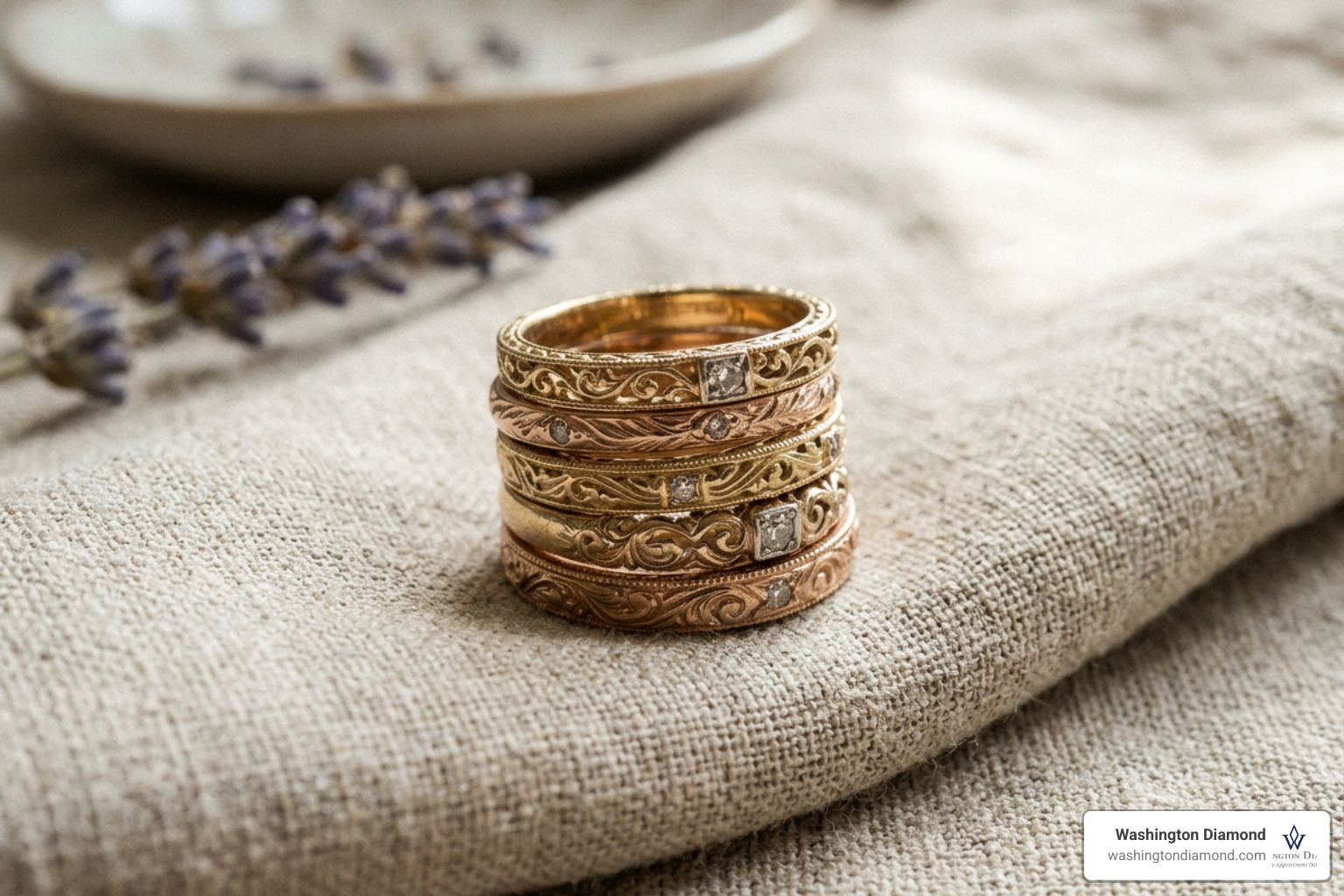
Antique wedding bands are rings that are 100 or more years old — made before the 1920s by today's standards. They differ from vintage bands (20–99 years old) and estate jewelry (any pre-owned piece, regardless of age).
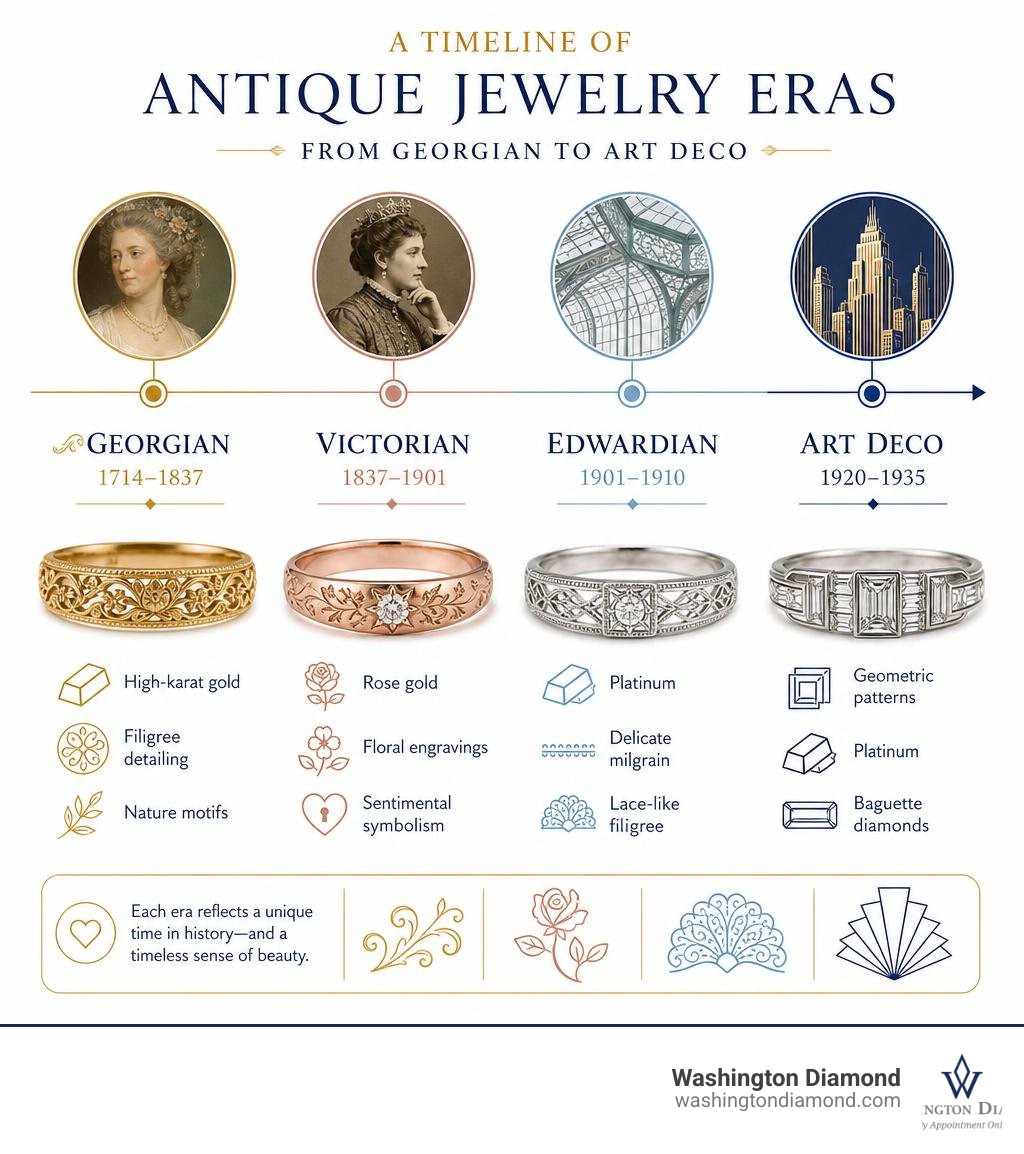
Here is a quick overview of the most popular antique band eras:
| Era | Approximate Dates | Key Features |
|---|---|---|
| Georgian | 1714–1837 | High-karat gold, filigree, nature motifs |
| Victorian | 1837–1901 | Rose gold, floral engravings, sentimental symbolism |
| Edwardian | 1901–1910 | Platinum, delicate milgrain, lace-like filigree |
| Art Deco | 1920–1935 | Geometric patterns, platinum, baguette diamonds |
These bands are not just beautiful — each one carries real history. Some survived the Great Depression and both World Wars, passing through multiple hands before reaching yours.
Shoppers are drawn to antique bands for many reasons: the hand-engraving and milgrain details that modern manufacturing rarely replicates, the unique diamond cuts like old European and old mine cuts, and the sense that you are stewarding a piece of history rather than simply buying jewelry.
But shopping for antique bands also comes with real questions. Can they be resized? How do you verify authenticity? How do you pair one with a modern engagement ring? This guide answers all of that.
I'm Tom Daube, a GIA-certified jewelry expert and designer with decades of experience helping clients find and evaluate antique wedding bands with exceptional craftsmanship and value. I'll walk you through everything you need to know to make a confident, informed choice.
Antique wedding bands word roundup:
What Defines Genuine Antique Wedding Bands?
When starting your search, the terminology can feel a bit like a maze. To make an informed investment, it is vital to know exactly what you are looking at.
In the jewelry industry, a true antique must be at least 100 years old. Because we are currently in July 2026, any genuine antique wedding band must have been crafted in or before 1926. This means that early Art Deco, Edwardian, Victorian, and Georgian rings officially fall into the antique category.
- Antique Wedding Bands (100+ Years Old): Crafted before 1926. These rings represent historical hand-fabrication techniques from eras before mass production.
- Vintage Wedding Bands (20–99 Years Old): Crafted between 1926 and 2006. This includes Mid-Century Modern, Retro, and late Art Deco styles.
- Estate Wedding Bands: A broad umbrella term for any jewelry that has been previously owned. An estate ring can be two years old or two hundred years old.
Understanding these distinctions prevents you from paying antique premiums for a piece that is actually a modern reproduction. If you love the look of historical designs but want a brand-new ring tailored specifically to your finger, exploring Custom Jewelry Through the Ages can show you how we recreate these classic styles using modern, durable techniques.
Choosing authentic Antique wedding rings is a deeply romantic endeavor. Many couples view themselves as "stewards" rather than simple owners. When you wear a ring that has survived generations, you are connecting your personal love story to a larger chain of human history.
Historical Eras and Design Characteristics
The design of an antique wedding band is a direct reflection of the tools, social movements, and artistic trends of the era in which it was made.
To help you compare the most popular design periods, let us look closely at the distinct artistic phases that shaped these historical treasures.
Victorian and Edwardian Antique Wedding Bands
The Victorian Era (1837–1901) was heavily influenced by Queen Victoria's personal life and tastes. Early Victorian jewelry was highly romantic, featuring floral motifs, ivy leaves (symbolizing fidelity), and snake designs (symbolizing eternity). As the era progressed, yellow and rose gold became the dominant metals. Victorian wedding bands often showcase intricate hand-engraving, scrolling patterns, and sometimes colorful gemstone accents like rubies or sapphires.
The Edwardian Era (1901–1910) shifted toward an ethereal, delicate aesthetic. Thanks to the invention of the oxyacetylene torch, jewelers could finally work with platinum, which has a incredibly high melting point. This allowed craftsmen to create "lace-like" designs that were incredibly strong yet visually light.
Key Edwardian hallmarks include:
- Filigree: Fine, pliable threads of platinum or gold twisted into intricate, openwork patterns.
- Granulation: A sophisticated technique where tiny spheres of gold or platinum are welded directly onto the metal surface without solder.
- Milgrain Edges: Tiny, decorative metal beads lining the borders of the ring, giving it a soft, framed appearance.
Art Deco Antique Wedding Bands
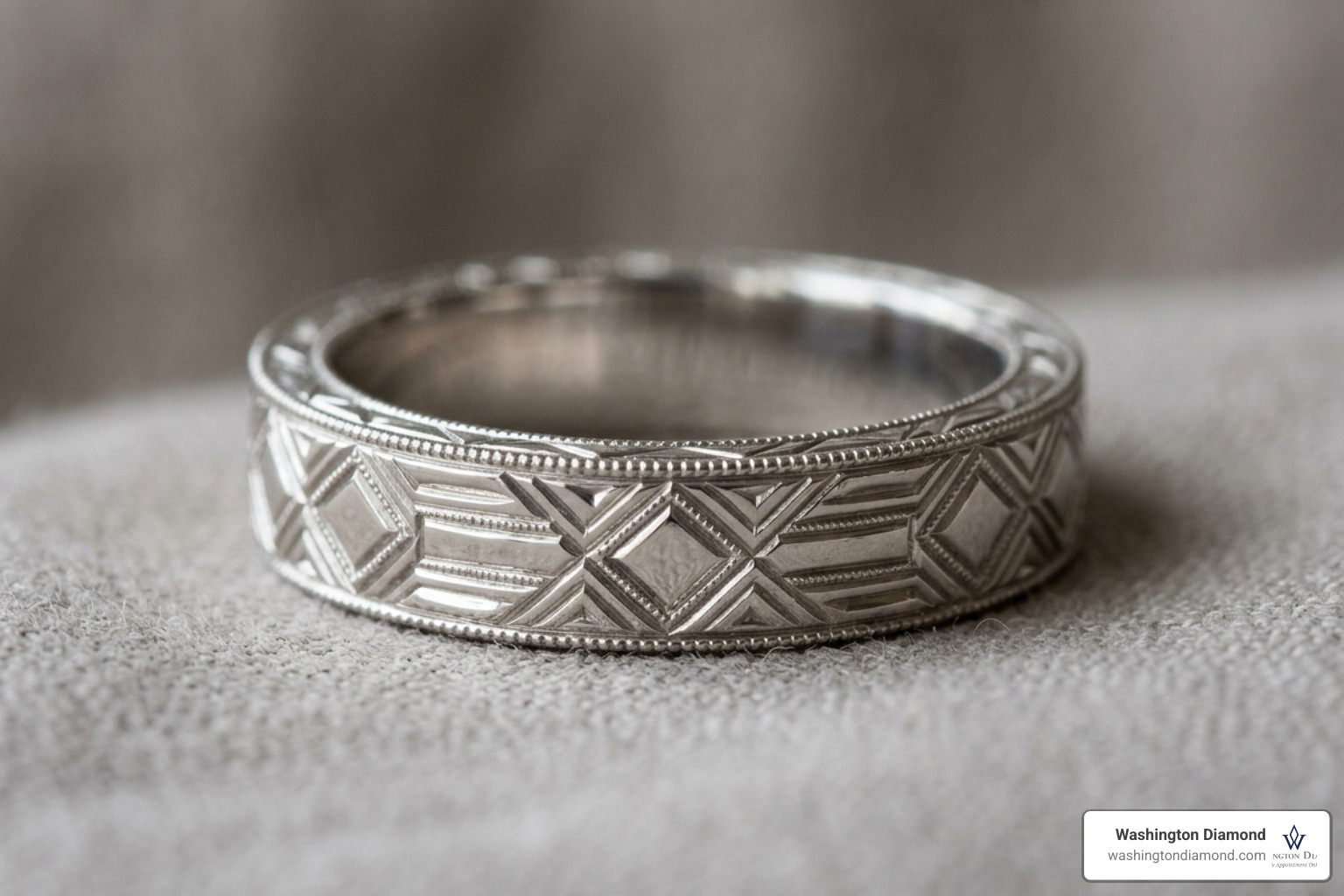
As we moved into the 1920s, the design landscape changed dramatically. The Art Deco Era (1920–1935) threw out the soft florals of the past in favor of bold, geometric symmetry, clean lines, and architectural structures.
If you appreciate bold patterns and structured elegance, reading our guide on Art Deco Rings: Vintage Charm for Your Modern Love Story will help you understand the cultural explosion that inspired these iconic designs. Additionally, gentlemen looking for a timeless, structured look can explore our comprehensive Art Deco Men's Wedding Band Guide.
Art Deco bands are highly sought after today for their structural integrity and timeless modernity. They frequently feature platinum bands set with small baguette or single-cut diamonds, repeating chevron patterns, and stylized wheat engravings.
Metals, Gemstones, and Sizing Considerations
Behind the beauty of every antique band lies the physical reality of its materials and construction. Understanding these elements is crucial for ensuring your ring survives daily wear for decades to come.
Precious Metals and Durability
Antique bands were primarily crafted in platinum, yellow gold, rose gold, and occasionally white gold (which was patented in the early 1920s as a cheaper alternative to platinum).
- Gold Purity: You will find antique rings in purities ranging from 10K to 22K. High-purity gold (like 22K) has a stunning, rich yellow color, but it is incredibly soft and prone to wearing down.
- Platinum vs. Gold Friction: If you plan to stack your wedding band with an engagement ring, pay attention to the metals. Platinum is structurally denser and harder than gold. Over years of rubbing against each other, a platinum band will slowly wear down a softer gold band. We recommend matching your metals whenever possible to prevent premature wear.
Antique Gemstone Cuts
The diamonds and gemstones in antique rings look entirely different from modern stones. Before computer-aided cutting, artisans cut stones by hand, optimizing them to glow under candlelight rather than sparkle under modern halogen bulbs.
- Old Mine Cut: An early diamond cut with a high crown, small table, and a square-ish cushion shape.
- Old European Cut: The predecessor to the modern round brilliant, featuring a round shape, heavy crown, and a distinct flat facet at the bottom (the culet).
- Rose Cut: A flat-bottomed stone with a dome-shaped top covered in triangular facets, resembling a rosebud.
- Sapphire Accents: Sapphires rate a 9 on the Mohs hardness scale (second only to diamonds), making them an exceptional, durable choice for adding a splash of historical color to your stack.
To see how these older cuts compare to modern brilliants in terms of light performance and setting styles, refer to our Diamond Wedding Bands Complete Guide.
Sizing and Resizing Limitations
Sizing an antique ring requires immense skill. Before you fall in love with a specific piece, you must understand its structural limitations.
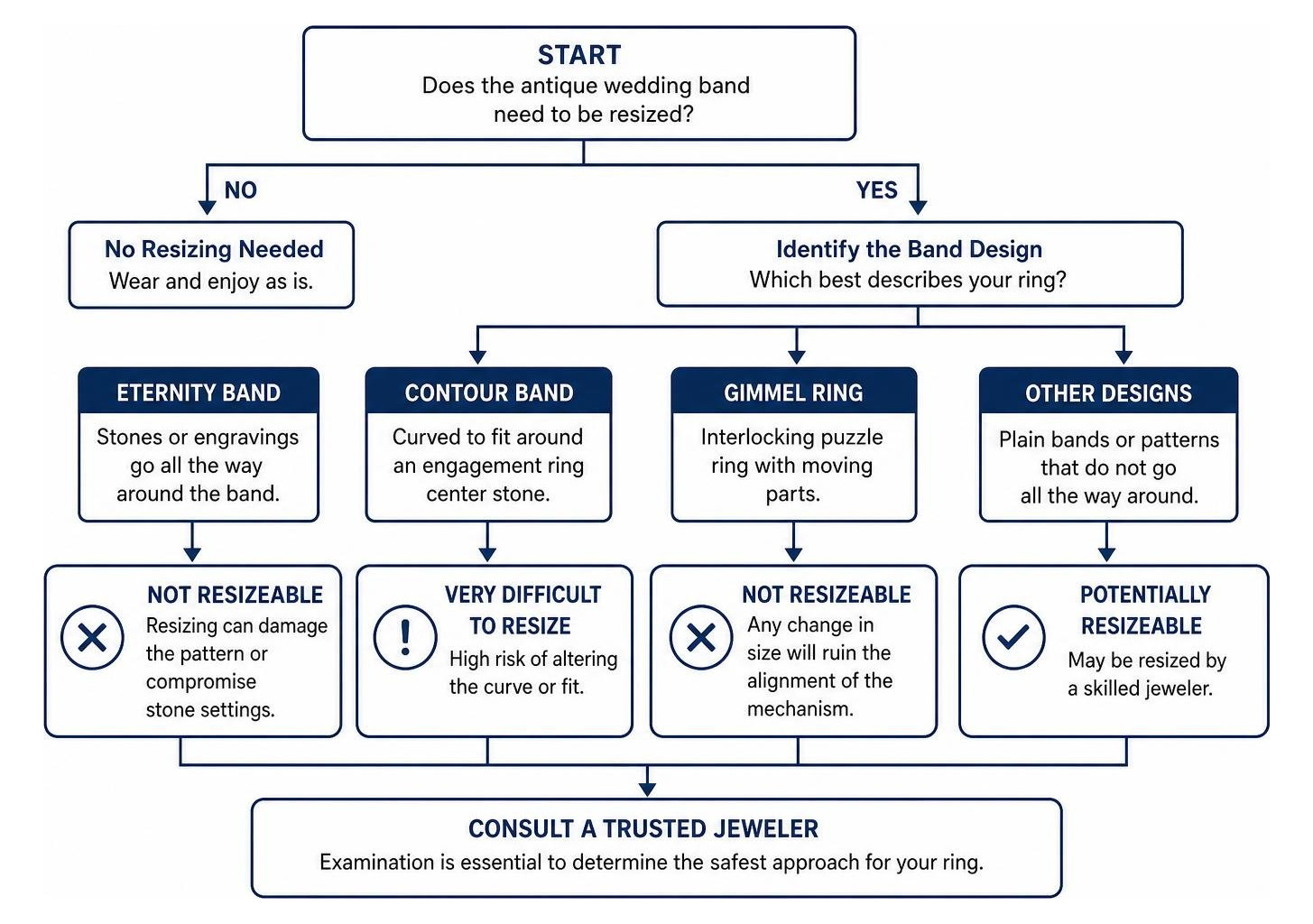
- Eternity Bands: Rings with diamonds or engravings that go all the way around the band are nearly impossible to resize without ruining the pattern or compromising the stone settings.
- Contour Bands: If your engagement ring has a low-profile center stone, a straight wedding band will not sit flush. A contour (curved) band is designed to hug the shape of your engagement ring, but finding a matching antique contour band can be incredibly difficult.
- Gimmel Rings: These rare, interlocking puzzle rings from the 19th century cannot be resized because any change in diameter ruins the alignment of the mechanism.
If you have found a gorgeous antique piece that needs to be sized, or if you want to know how we handle delicate metal adjustments, read our specialized resource: From Antique to Resized: Your Ultimate Guide to DC Jewelry Services.
Frequently Asked Questions About Antique Bands
How can I verify the authenticity and hallmarks of an antique band?
Authentic antique jewelry almost always bears tiny stamps on the inside (or sometimes the outside) of the band. These are called hallmarks. They can tell you the metal purity, the country of origin, the year of manufacture, and even the specific maker. For example, French antique 18-karat gold is traditionally stamped with an Eagle's head hallmark.
Because hallmarks can be faked or worn away over a century of use, the safest way to verify a ring's age is through a professional, independent gemologist appraisal. When shopping in the Northern Virginia area, consulting with an established, certified gemologist can provide the expert guidance needed to verify the age, metal content, and stone quality of your historical jewelry.
What is the typical price range for these historical rings?
The price of an antique wedding band is influenced by its era, metal weight, gemstone rarity, and whether it bears a signature from an iconic heritage house. Simple, hand-engraved Victorian gold bands can start around $600 to $1,000. On the higher end, platinum Art Deco eternity bands featuring rare old European or carré cut diamonds can range from $3,000 to well over $10,000.
Can a highly detailed antique band be resized safely?
It depends entirely on the design. If the band has a plain section at the bottom (often called a "sizing bar"), it can usually be adjusted by a size or two. However, if the ring features continuous hand-engraving, wheat patterns, or milgrain borders, cutting the band will interrupt the pattern. A master jeweler can sometimes re-engrave the pattern by hand over the seam, but this requires specialized artistry and will incur extra costs.
Finding Your Perfect Match in Northern Virginia
Choosing an antique wedding band is a deeply personal journey that shouldn't be rushed. While buying jewelry online can feel convenient, historical pieces possess a physical weight, patina, and unique gemstone personality that can only be truly appreciated in person.
At Washington Diamond, we do things differently. Located in Northern Virginia, our private, appointment-only studio is designed to give you our undivided attention. There are no crowded showrooms or high-pressure sales pitches—just a comfortable, personalized experience tailored to your timeline and budget.
Whether you want to evaluate an antique heirloom, resize a family treasure, or use our custom jewelry design services to recreate a stunning Edwardian or Art Deco design with modern durability, we are here to bring your vision to life.
Ready to find the ring that speaks to your forever? Schedule your private consultation with Washington Diamond today.
Have a question about your jewelry?
We've been helping clients with diamonds, custom design, repairs, appraisals, and more since 1969. Book a private appointment at our Falls Church studio.
Book an AppointmentTrusted since 1969 · Falls Church, VA · 703-536-3600
From the blog
View all


