

Why 3 Round Diamond Engagement Rings Never Go Out of Style
Why Three Round Diamond Engagement Rings Endure
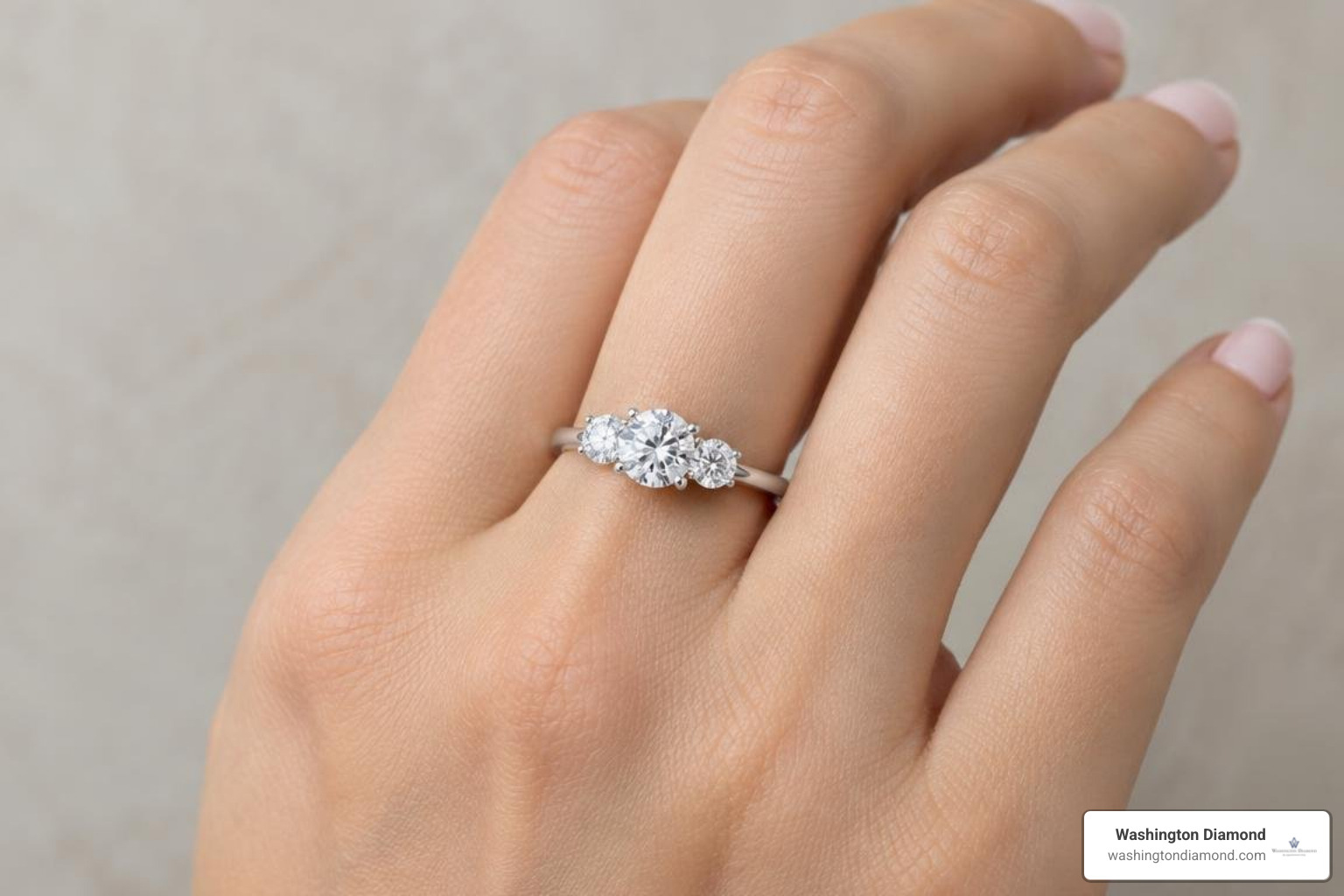
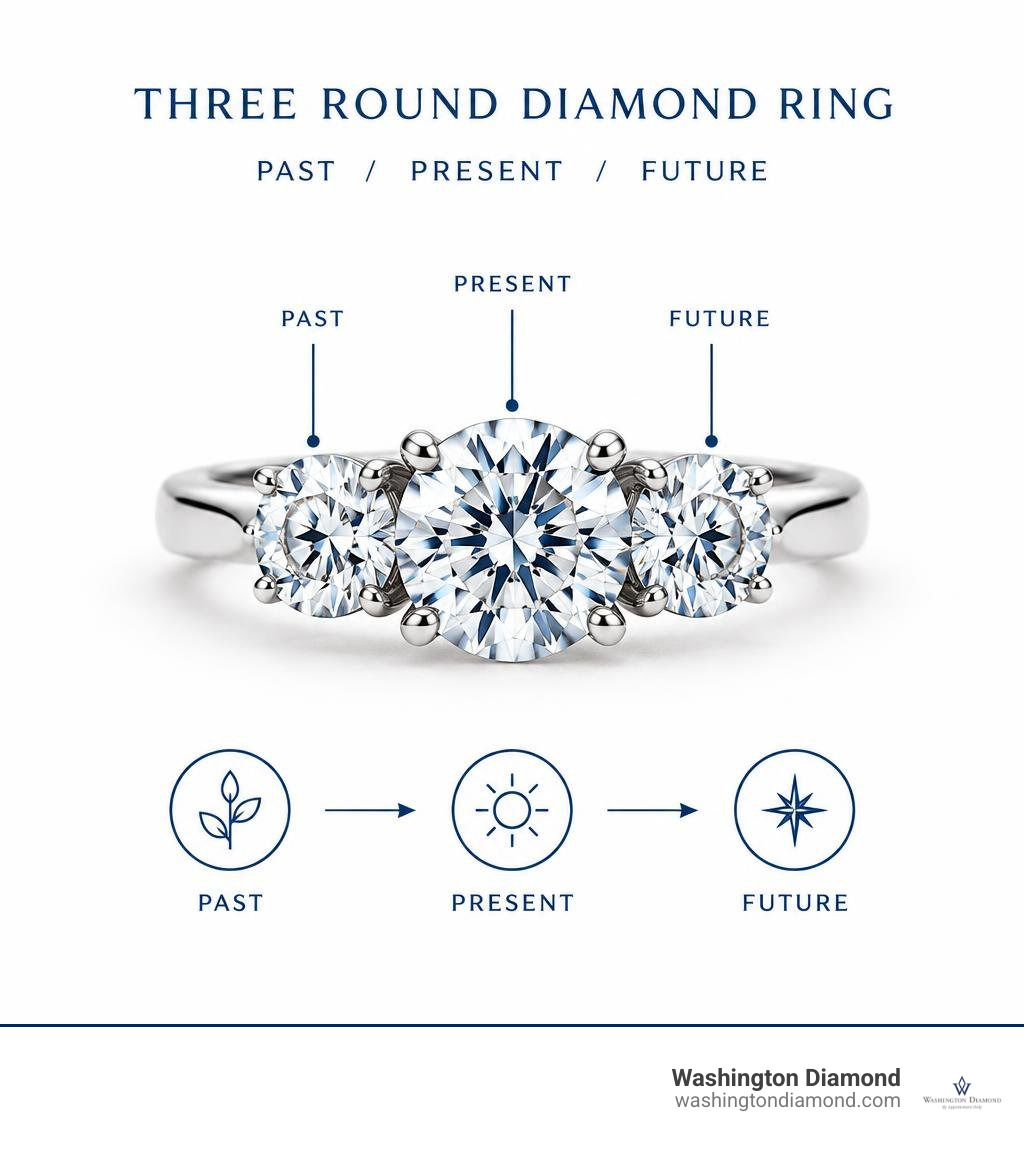
A three round diamond engagement ring places a round diamond between two round side stones. Often called a trilogy ring, its stones can represent a couple's past, present, and future. It offers more sparkle and finger coverage than a solitaire while keeping a classic look. If you're exploring this style, start by choosing a center stone you love, then look for side stones that match its color and complement its size. The Gemological Institute of America notes that round brilliant diamonds are the most popular shape for engagement rings, which helps explain why this three-stone style remains a leading bridal choice.
I'm Tom Daube. My experience with jewelry design, GIA-graded diamonds, and diamond recutting helps me guide buyers through choices like a 3 round diamond engagement ring without making the process feel overwhelming.
Anatomy and Design of a 3 Round Diamond Engagement Ring
At its core, the architecture of a three-stone ring is an exercise in symmetry and optical balance. Rather than relying on a solitary focal point, this design features a primary center diamond flanked by two carefully matched side stones. When crafted with round brilliant cuts, the design forms a continuous ribbon of fire and scintillation across the top of the finger.
The center stone acts as the anchor, commanding the most visual weight and height. The side stones serve as graceful bridges, connecting the center diamond to the precious metal band. This setup creates exceptional finger coverage, often covering the entire width of the finger from a top-down view.
Crafting this look requires structural harmony. Each stone must sit at an angle that catches light naturally without crowding its neighbors. For a clean, traditional look, our three stone round diamond 14k white gold setting demonstrates how understated prongs keep all three gems secure while letting light enter from every angle.
The Timeless Symbolism of Trilogy Rings
Beyond the visual sparkle, trilogy rings carry deep emotional resonance. Traditionally, the three gems symbolize:
- The Past: The foundation of your relationship, shared memories, and the journey that brought you together.
- The Present: The commitment you make today, symbolized by the central (and usually largest) diamond.
- The Future: The shared promises, adventures, and milestones still ahead.
Some couples choose to interpret the trio as representing friendship, love, and fidelity, or as a nod to shared spiritual values. This layered meaning makes the ring feel less like a simple piece of jewelry and more like a personal story you wear every day.
Visual Benefits: Maximum Sparkle and Finger Coverage
There is a clear mathematical reason why round brilliant diamonds remain the most sought-after cut in bridal jewelry—they make up roughly 75% of all engagement rings sold in the United States. Designed with 57 or 58 precision-cut facets, a round diamond reflects light straight back to the viewer with unmatched brilliance.
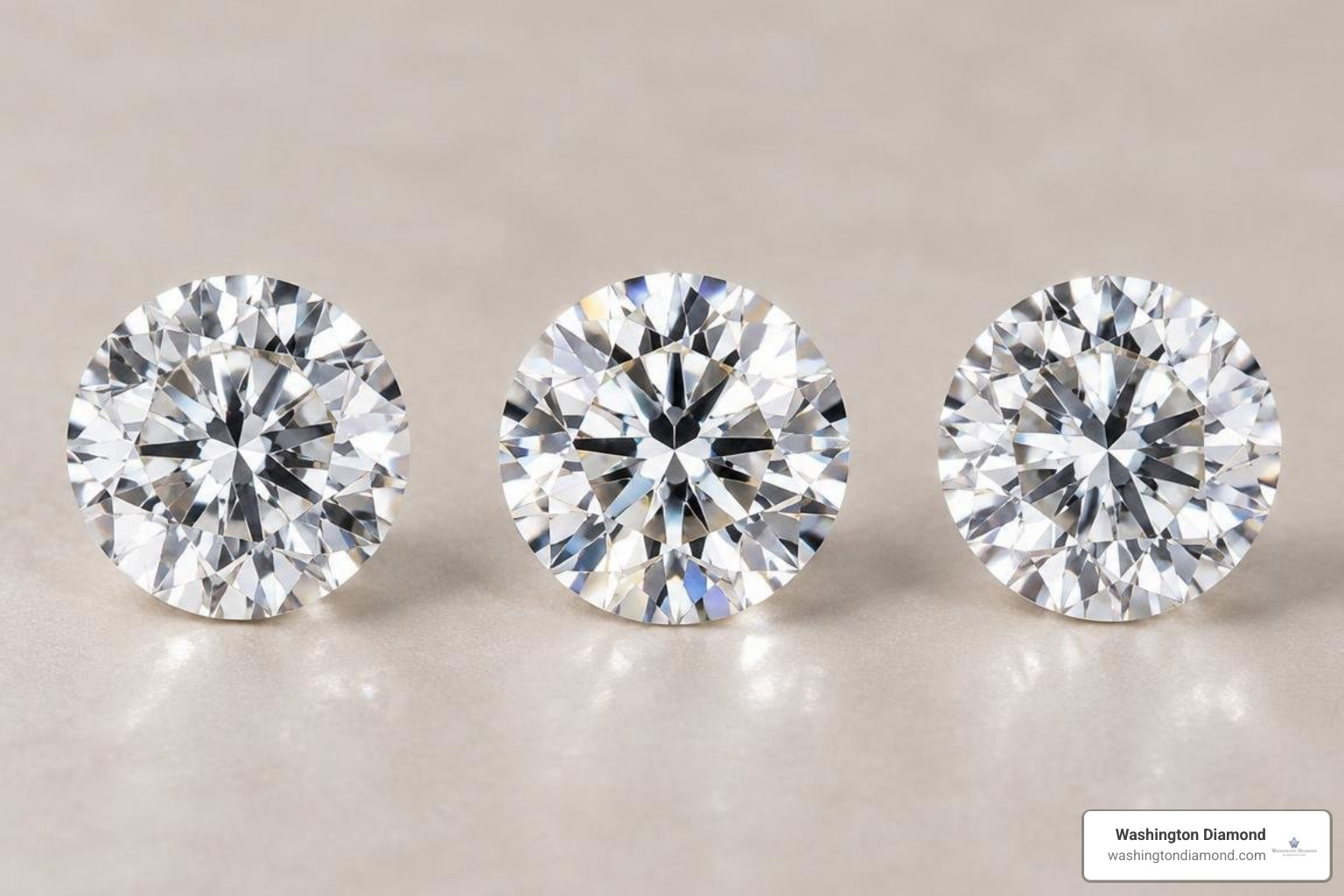
When you place three round diamonds together, that light performance multiplies across the hand. Around 60% of couples designing a three-stone ring choose a round center diamond because its symmetry creates a seamless, balanced look alongside matching round side stones. The result is a smooth spread of sparkle that naturally flatters the hand without looking bulky.
Selecting the Best Quality, Size, and Proportions
Selecting three diamonds is slightly different from buying a single solitaire. Instead of evaluating one stone on its own, you need all three diamonds to match in color, cut quality, and visual balance. To better understand how different mountings affect these choices, take a look at our engagement ring settings guide.
Choosing Diamond Proportions for a 3 Round Diamond Engagement Ring
The visual character of your ring comes down to the ratio between your center stone and the flanking side gems. There are three classic proportion strategies:
- Classic Graduated Ratio (1:0.3 to 1:0.5): The side stones are about one-third to one-half the carat weight of the center diamond. This keeps the primary focus firmly on the center stone while providing balanced side accents.
- Substantial Trio Ratio (1:0.6 to 1:0.75): The side diamonds are closer in size to the center. This creates a wider, bolder statement across the finger.
- Equal Weight Trilogy (1:1): All three stones share the exact same carat weight. This vintage-inspired layout creates a completely uniform band of light.
| Proportion Style | Center-to-Side Carat Ratio | Visual Effect | Best Suited For |
|---|---|---|---|
| Subtle Accent | 1 : 0.25 – 0.35 | Highlights center diamond; dainty frame | Slender fingers, modest budgets |
| Classic Graduated | 1 : 0.40 – 0.50 | Balanced transition; traditional trilogy profile | Everyday wear, timeless appeal |
| Prominent Trio | 1 : 0.60 – 0.75 | Wide spread; substantial finger presence | Maximum finger coverage |
| Equal Stones | 1 : 1.00 | Bold, horizontal statement; vintage look | Distinctive, modern heirloom aesthetic |
Matching the 4Cs Across Three Stones
When buying a multi-stone ring, harmony across the 4Cs (Cut, Color, Clarity, and Carat) is essential:
- Cut: Never compromise on cut grade. All three diamonds should feature an Excellent or Ideal cut. If one stone has a lower cut grade, it will look dull next to the others.
- Color: The human eye easily spots color differences when diamonds sit side by side. Keep all three stones within one color grade of each other (for example, an F center stone with G side stones, or all G-grade stones).
- Clarity: Side stones can often be graded slightly lower in clarity (such as VS2 or eye-clean SI1) without showing flaws, which helps you invest more of your budget into cut and carat weight.
- Fluorescence: Make sure all three diamonds have matching fluorescence levels under UV light so they react consistently in direct sunlight.
Popular Settings and Metal Choices for Three Stone Rings
The mounting holds your diamonds securely while shaping the overall personality of the ring. A well-designed basket ensures the side stones angle slightly downward along the curve of your finger, creating an easy, comfortable fit for daily wear.
For those who love refined architecture, our three stone platinum cathedral diamond setting uses sweeping metal arches that elevate the center diamond to catch maximum ambient light.
Metal Variations: Platinum vs. White Gold vs. Yellow Gold
Your choice of precious metal influences both the durability and the overall style of your ring:
- Platinum: Naturally white and hypoallergenic, platinum is dense and exceptionally durable. It develops a soft patina over time and holds side stones securely with little maintenance. Our three stone platinum engagement ring setting showcases how this metal pairs with classic round stones.
- 18K and 14K White Gold: Rhodium-plated white gold gives you a bright, reflective shine at a lighter weight and accessible price point. For a modern twist on the classic trilogy, consider the split shank three stone 18k white gold setting.
- 18K and 14K Yellow Gold: Yellow gold offers warm, vintage contrast against bright white diamonds. It can also complement near-colorless diamonds (G to J color grades) beautifully.
- Rose Gold: A romantic, copper-tinted alloy that adds a warm blush to the ring's profile.
Setting Styles: Prong, Bezel, and Cathedral Profiles
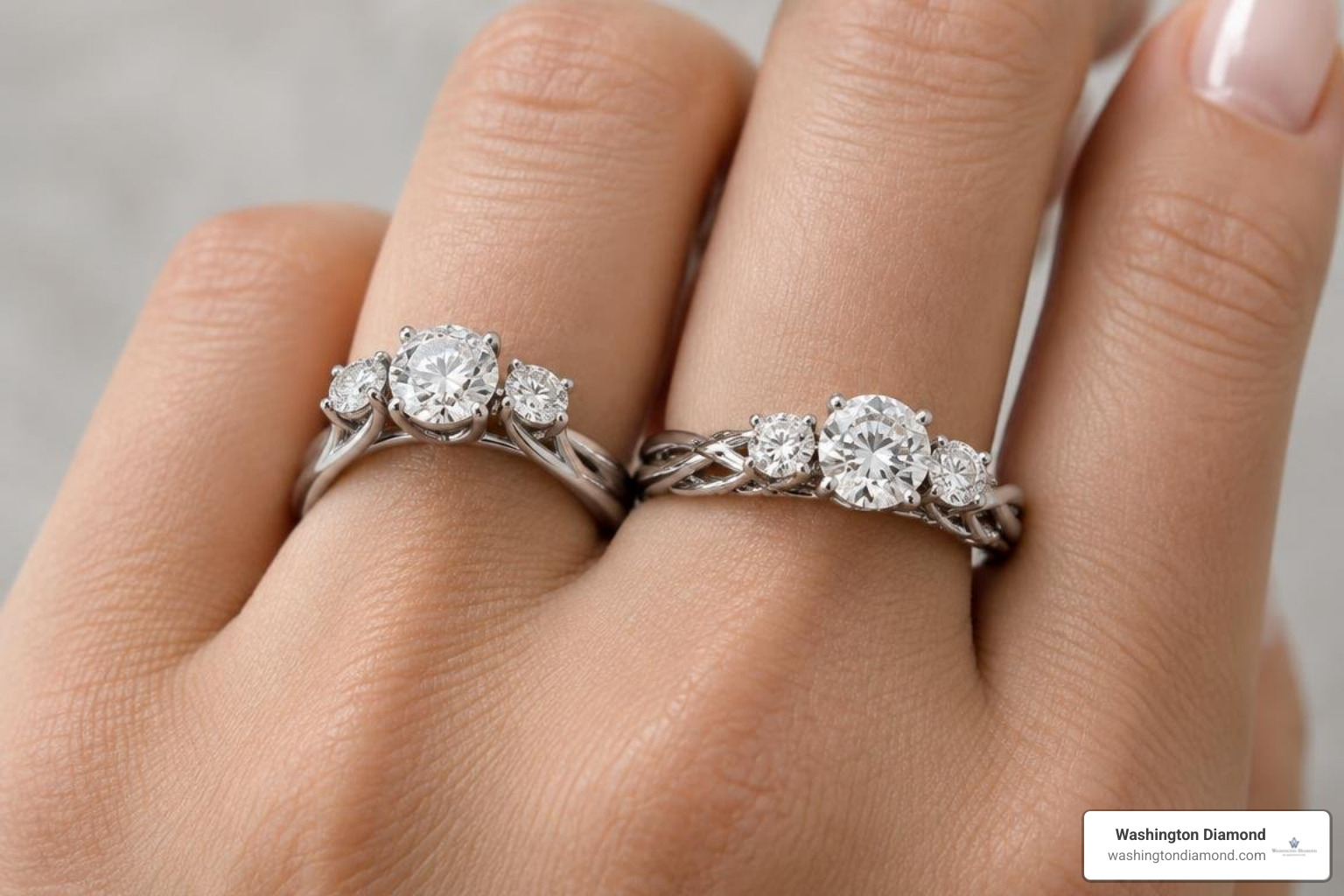
- Classic Four-Prong or Six-Prong: Traditional prongs hold each diamond securely while allowing light to flow freely underneath the stones.
- Trellis / Sweetheart Baskets: Prongs interweave in graceful curves below the diamonds, adding an elegant side profile.
- Bezel Mounting: A fine rim of precious metal encases the outer edge of each round stone. This offers complete perimeter protection for active lifestyles.
- Cathedral Profiles: Metal shoulders rise from the band toward the outer edges of the side diamonds, providing added strength and a raised, regal silhouette.
Budget, Pricing, and Value Comparison
A major benefit of choosing three stones is smart budget allocation. Because diamond prices increase exponentially as carat weight rises, a multi-stone ring often gives you a larger overall visual footprint for less money than a single, high-carat solitaire.
You can browse our complete engagement rings selection to see how different diamond combinations match various price points.
Average Cost Breakdown for a 3 Round Diamond Engagement Ring
A quality 1-carat round diamond typically costs between $4,000 and $6,000 USD on its own. Total prices for a three-round-diamond engagement ring generally range from $2,500 to over $15,000 USD, depending on your chosen total carat weight, clarity, color grades, and precious metal choice.
By choosing a slightly smaller center diamond (such as 0.90 carats) and pairing it with two 0.30-carat side stones, you achieve a 1.50-carat total weight. This often costs thousands less than a single 1.50-carat solitaire, while covering more area across the finger.
Three Stone vs. Solitaire and Halo Price Comparison
| Ring Style | Total Carat Weight (TCW) | Example Configuration | Relative Cost Efficiency | Finger Spread / Visual Coverage |
|---|---|---|---|---|
| Solitaire | 1.50 ct | Single 1.50 ct center diamond | Lower (steep per-carat price step) | Focused on center diameter |
| Three Stone | 1.50 ct | 0.90 ct center + two 0.30 ct side stones | High (spread across smaller stones) | Wide horizontal coverage across finger |
| Halo Setting | 1.50 ct | 1.00 ct center + 0.50 ct micro-pave | Moderate (higher labor and setting cost) | Expansive surface diameter around center |
Frequently Asked Questions About Three Round Diamond Rings
What do the three stones in a trilogy ring represent?
Traditionally, the three gems symbolize the past, present, and future of a couple's journey together. The center stone represents the present moment and your lifelong commitment, while the side stones honor where you started and where you are headed together.
How should side stones be sized relative to the center round diamond?
For a balanced look, side stones are usually sized between one-third and one-half the carat weight of the center diamond (a 1:0.33 to 1:0.50 ratio). If you prefer a wider look across the finger, side stones sized at 60% to 75% of the center diamond create a bolder profile.
Can I pair a curved wedding band with a 3 round diamond ring?
Yes. Because three stone settings are wider at the base, traditional straight wedding bands may leave a slight gap against the engagement ring. A custom contour band, notched wedding ring, or curved band wraps neatly around the base of the center basket for a snug, flush fit.
Conclusion
A three-stone ring brings together romantic symbolism, exceptional sparkle, and smart value. Its balanced proportions have looked stunning for generations and will continue to look just as graceful decades from now.
At Washington Diamond, we believe choosing an engagement ring should be an intimate, stress-free experience. In our private, appointment-only studio in Northern Virginia, we provide dedicated, one-on-one guidance to help you examine loose diamonds, compare proportions, and create a custom piece made to last.
Explore our curated three stone engagement rings collection or schedule a private consultation with our team to bring your vision to life.
Have a question about your jewelry?
We've been helping clients with diamonds, custom design, repairs, appraisals, and more since 1969. Book a private appointment at our Falls Church studio.
Book an AppointmentTrusted since 1969 · Falls Church, VA · 703-536-3600
From the blog
View all


