

Don't Get Fooled: The Ultimate Guide to Getting Your Diamond Appraised
What is a Diamond Appraisal? (And What It's Not)
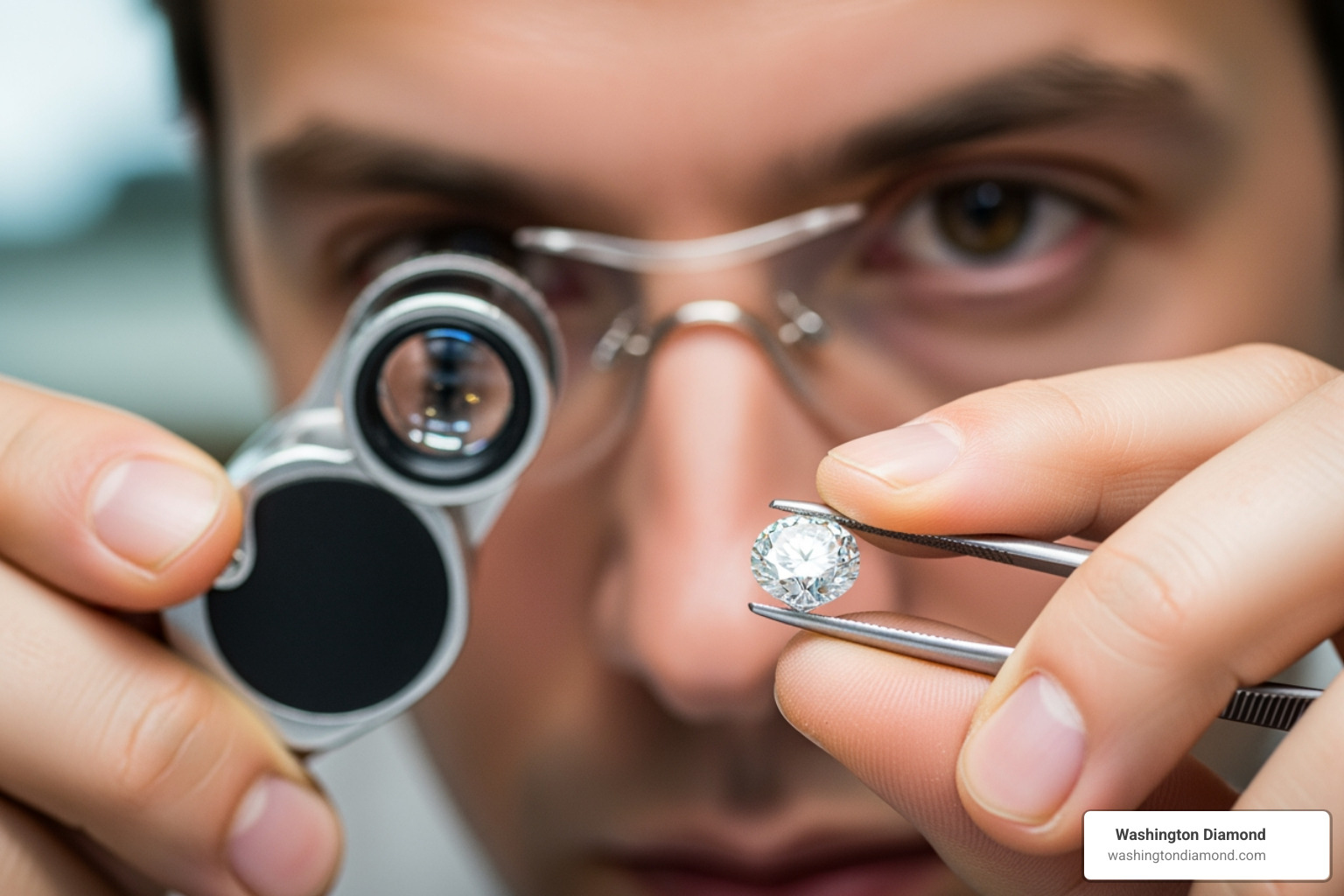
When you get diamond appraised, you gain a clear understanding of its true worth and characteristics. This is a vital step for any diamond owner, as it provides you with an official document detailing every aspect of your precious stone and its setting. This document is your key to protecting and understanding your investment.
Getting an appraisal is important for several key reasons:
- Insurance: It helps you get proper coverage. This protects your valuable diamond from loss, theft, or damage.
- Estate Planning: Appraisals help fairly divide inherited jewelry among family members.
- Resale Knowledge: You learn the real market value if you decide to sell your diamond.
- Peace of Mind: You can confirm your diamond's authenticity and quality, ensuring it is what you believe it to be.
I'm Tom Daube, a GIA Certified Diamond expert and custom jewelry designer. I specialize in helping clients confidently get diamond appraised and truly understand their jewelry's value, drawing on my experience as one of the top 1% of jewelers in the country. Many of my clients visit our private studio in Northern Virginia with questions like, "Is my engagement ring insured for the right amount?" or "What is Grandma's ring really worth?" A professional appraisal gives clear, documented answers.
When you take the time to get your diamond appraised, you are also creating a verifiable paper trail. This can be invaluable if you ever move insurance companies, relocate to a new state, or need to prove ownership after a loss or theft. An appraisal gives your jewelry a documented identity that follows it wherever life takes you.

Key get diamond appraised vocabulary:
If you've ever wondered about the true worth of your cherished diamond, you're not alone. The journey to understanding its value begins with a diamond appraisal. But what exactly is it, and what should you expect? Let's dive in.
Defining a Diamond Appraisal and Its Importance
At its core, a diamond appraisal is an official document that describes your diamond in detail, assesses its quality, and provides an expert's opinion of its monetary value. Think of it as a comprehensive report card for your diamond, penned by a qualified professional. This isn't just a casual estimate; it's a formal assessment that holds significant weight for various practical and personal reasons.
The process to get diamond appraised involves a thorough examination by a trained professional who evaluates multiple aspects of your jewelry. This includes not only the diamond itself but also the setting, the metal used, the craftsmanship quality, and the overall design. Each element contributes to the final valuation, making the appraisal a comprehensive assessment of your entire piece.
Why is this document so important? The reasons are varied and vital:
Insurance Purposes: This is the most common reason people get diamond appraised. An accurate appraisal provides a detailed description and a stated replacement value, which insurance companies require to issue a policy. If your diamond is ever lost, stolen, or damaged, your insurance provider will use this document to determine the exact cost of replacing it with an item of like kind and quality. Without it, you risk being underinsured and facing a significant financial loss. Insurance companies typically require appraisals for jewelry valued over a certain threshold, often $5,000 or more, though this varies by provider.
Estate Planning: For inherited heirlooms, an appraisal provides a fair and objective value. This is crucial for equitable distribution among beneficiaries according to a will or for estate tax purposes. It removes guesswork and the potential for family disputes, ensuring a smooth and fair process during what can be a difficult time. Estate appraisals also help executors understand the total value of an estate and can be essential for determining whether estate taxes apply.
Legal Documentation: Appraisals serve as legally recognized documents in various situations. In divorce settlements, for example, they provide an impartial valuation for the equitable division of assets. They are also necessary for documenting the value of charitable donations for tax deduction purposes. Courts rely on professional appraisals as objective evidence of value, making them essential in any legal proceeding involving jewelry.
Understanding Your Investment: Beyond legal or financial necessities, an appraisal offers invaluable peace of mind. It independently verifies your diamond's authenticity and characteristics (the 4Cs), confirming that the quality matches what was stated at the time of purchase. This gives you a deeper understanding of and confidence in what you own. Many diamond owners find interesting details about their stones during the appraisal process, such as unique characteristics or historical significance they weren't aware of.
Documentation for Future Generations: A professional appraisal creates a permanent record of your diamond's characteristics and value at a specific point in time. This documentation becomes part of your jewelry's provenance, which can be invaluable for future generations who inherit the piece. It tells the story of the diamond and provides context for its significance within your family.
An appraisal isn't just a piece of paper; it's a critical tool for protecting your assets and making informed decisions about your precious jewelry. It provides a detailed description of your item, assessing its quality and offering an opinion of its value. The document typically includes photographs, detailed measurements, and a thorough description that would allow someone to identify and replace your specific piece if necessary.
For a deeper dive into jewelry valuations, explore our guide on Everything You Need to Know About Jewelry Appraisals.
Appraisal vs. Grading Report: A Critical Distinction
Here's where things can sometimes get a little confusing for first-time diamond owners. Many people use the terms "diamond appraisal" and "diamond grading report" interchangeably, but they are fundamentally different documents with distinct purposes. Understanding this difference is crucial when you get diamond appraised.
Let's break down the key differences:
| Feature | Diamond Appraisal Report | Diamond Grading Report (e.g., GIA) |
|---|---|---|
| Primary Purpose | To assign a monetary value for a specific use (e.g., insurance, estate). | To scientifically assess and grade the quality and characteristics of a diamond. |
| Who Issues It | A certified, independent appraiser or gemologist (e.g., GIA G.G.). | A third-party gemological laboratory (e.g., GIA, AGS). |
| Key Contents | The 4Cs, measurements, setting details, metal type, craftsmanship, and a stated dollar value. | The 4Cs, proportions, fluorescence, polish, symmetry, and a plot diagram of inclusions. |
| Value Assigned | Assigns a specific monetary value (e.g., Retail Replacement Value). | Does not assign any monetary value. |
| Validity Period | Typically valid for 2-3 years due to market fluctuations. | Remains valid indefinitely as the diamond's characteristics don't change. |
| Scope | Evaluates the entire piece of jewelry. | Evaluates only the loose diamond before setting. |
A Diamond Grading Report, often called a certificate, is a scientific blueprint of a loose diamond. It is issued by an independent gemological laboratory like the Gemological Institute of America (GIA). Its sole purpose is to identify and grade the diamond's specific qualities—the famous 4Cs (Cut, Color, Clarity, and Carat Weight), along with finish (polish and symmetry), fluorescence, and precise measurements. It is an objective, unbiased analysis of the stone itself, with no mention of price or market worth.
These grading reports are created in controlled laboratory conditions using sophisticated equipment and standardized procedures. Multiple gemologists typically review each diamond to ensure accuracy and consistency. The report includes a unique identification number that is often laser-inscribed on the diamond's girdle, creating a permanent link between the stone and its documentation.
An Appraisal Report, in contrast, is an opinion of value. A qualified appraiser uses the data from the grading report as a starting point but also considers many other factors. These include the design and craftsmanship of the jewelry setting, the type and weight of the precious metal, and current market conditions. The appraiser then assigns a dollar value based on the purpose of the appraisal. For insurance, this is typically the "Retail Replacement Value"—the cost to replace the entire piece at a traditional retail jewelry store.
The appraisal process takes into account market factors that a grading report doesn't consider. These include regional price variations, the reputation of the original seller, current supply and demand dynamics, and even seasonal fluctuations in the jewelry market. An experienced appraiser understands these nuances and factors them into the final valuation.
Think of it this way: the grading report is the diamond's resume, listing its qualifications. The appraisal is the job offer, stating its worth in a specific context. Both documents serve important but different purposes in documenting and protecting your diamond investment.
In our Northern Virginia studio, we often review existing grading reports from labs such as GIA or AGS, verify that the diamond matches the report, and then prepare an appraisal custom to what you actually need—whether that is for insurance, resale, or estate planning. That combination of scientific grading and real-world valuation is what allows you to confidently get diamond appraised and fully protected.
It's worth noting that while a grading report is essential for understanding your diamond's quality, it alone is not sufficient for insurance purposes. Insurance companies require an appraisal that states a specific dollar value for coverage. Similarly, while an appraisal provides a value, it may not include the detailed quality analysis that a grading report offers. For complete documentation and protection, having both documents is ideal, especially for significant diamond purchases or valuable heirloom pieces.
From the blog
View all


